Starting a stretching routine can feel overwhelming when you don’t know where to begin. Many beginners worry about doing stretches wrong or not being flexible enough to start.
The truth is that stretching is one of the most accessible forms of exercise that anyone can do, regardless of their current fitness level.
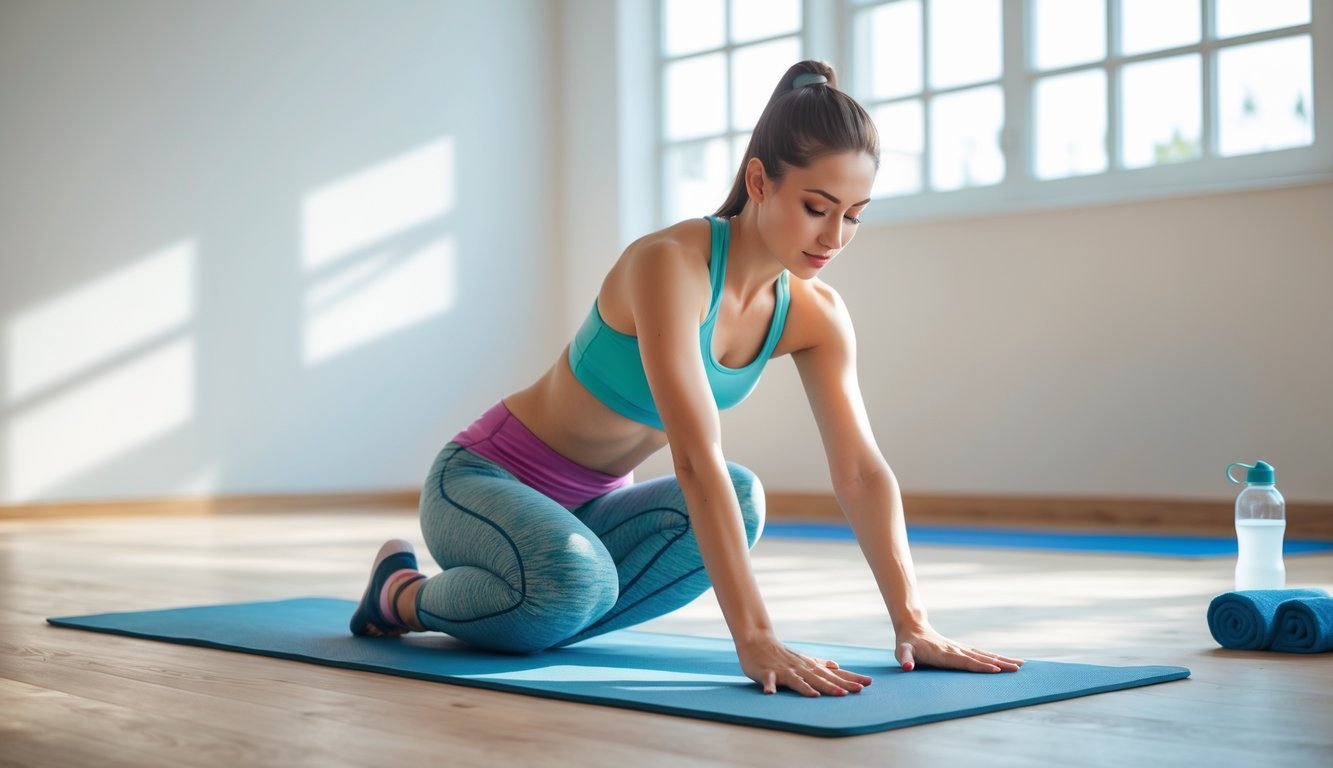
Regular stretching helps beginners improve flexibility, reduce muscle tension, and move better in daily activities. Just 10-15 minutes of practice 2-3 times per week can make a noticeable difference.
The key is starting with simple stretches that don’t require getting on the floor or complicated positions. Standing and seated options work just as well for building flexibility.
Most people notice improved flexibility and less stiffness within a few weeks of consistent practice. Whether you want to touch your toes, reduce back pain from sitting all day, or simply move more freely, a basic stretching routine provides the foundation for better mobility and overall wellness.
Key Takeaways
- Beginners can start stretching with simple standing or seated positions that require no equipment.
- Consistency matters more than intensity when building flexibility and reducing muscle tightness.
- A complete beginner routine takes only 10-15 minutes and shows results within 2-4 weeks of regular practice.
Why Stretching Matters for Beginners
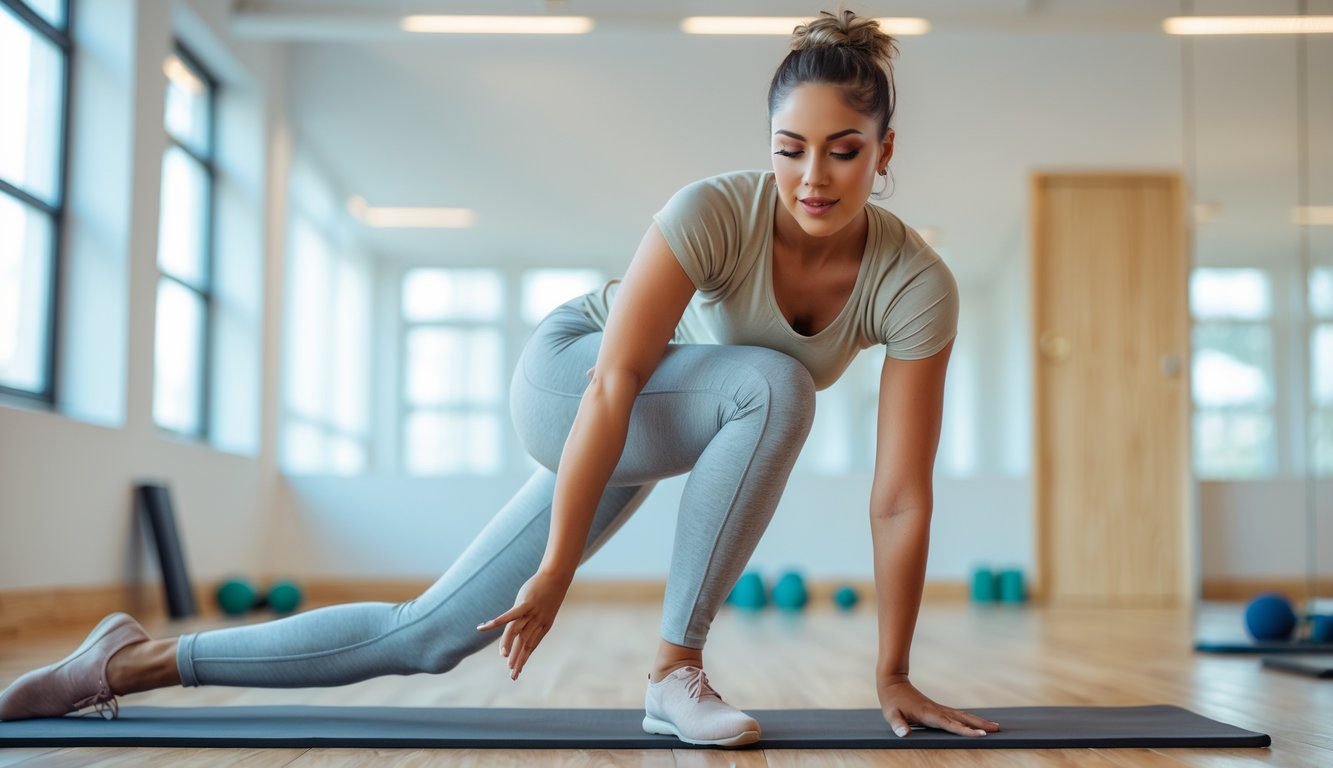
Stretching provides measurable benefits that improve daily movement and reduce physical discomfort. Regular stretching helps beginners build flexibility, prevent common injuries, and enhance overall mobility for a better quality of life.
Core Benefits of Stretching
Stretching delivers immediate and long-term benefits that impact daily activities. Regular stretching improves circulation by increasing blood flow to muscles and joints.
Better circulation helps muscles recover faster after exercise. This increased blood flow also reduces stiffness that builds up from sitting or repetitive movements.
Stretching enhances posture by lengthening tight muscles that pull the body out of alignment. Poor posture creates muscle imbalances that lead to pain and discomfort.
Daily stretching helps counteract these imbalances. It strengthens weak muscles while relaxing overactive ones.
Balance and coordination improve through stretching routines. When muscles move through their full range of motion regularly, the body maintains better stability.
This enhanced balance reduces the risk of falls and makes everyday movements easier.
Impact on Flexibility and Mobility
Flexibility refers to how far muscles can stretch, while mobility describes how joints move through their full range of motion. Both improve significantly with consistent stretching practice.
Range of motion increases when muscles and connective tissues adapt to regular stretching. This adaptation happens gradually over several weeks of consistent practice.
Beginners often notice improved flexibility within two to three weeks. More significant changes in range of motion typically occur after two to three months of regular stretching.
Tight muscles from desk work, exercise, or daily activities respond well to stretching routines. Common problem areas include:
- Hip flexors from prolonged sitting
- Shoulders and neck from computer work
- Hamstrings from lack of movement
- Calves from wearing heels or limited activity
Enhanced mobility makes everyday tasks easier. Simple activities like reaching overhead, bending down, or turning to look behind become more comfortable with improved flexibility.
Reducing Injury Risk
Stretching prepares muscles and joints for physical activity by warming up connective tissues. This preparation significantly reduces injury risk during exercise and daily activities.
Muscle preparation through stretching increases tissue temperature and elasticity. Warm, flexible muscles resist tears and strains better than cold, tight muscles.
Dynamic stretching before exercise activates muscles through their movement patterns. This activation improves muscle coordination and reaction time during physical activity.
Fall prevention improves with regular stretching routines. Better flexibility and balance help people recover from unexpected movements or slips.
Older beginners especially benefit from stretching programs that focus on balance and stability. These routines help maintain independence and confidence in movement.
Static stretching after exercise helps muscles return to their resting length. This recovery process prevents muscles from staying shortened, which can lead to imbalances and future injuries.
Consistent stretching creates a protective effect that builds over time. Regular practitioners experience fewer muscle strains, joint problems, and movement-related injuries.
Understanding Stretching Basics
Stretching involves two main types: dynamic movement before exercise and static holds after workouts. Most beginners should stretch 2-3 times per week, holding positions for 30 seconds without bouncing or forcing movements.
Types of Stretching: Dynamic vs Static
Dynamic stretching uses controlled movements to prepare muscles for exercise. These stretches involve moving joints through their full range of motion repeatedly.
Examples include leg swings, arm circles, and walking lunges. Dynamic stretches increase blood flow and body temperature before workouts.
Static stretching involves holding a position without movement. The person stretches a muscle to its comfortable limit and holds for 15-30 seconds.
Static stretches work best after exercise when muscles are warm. Examples include touching toes, calf stretches against a wall, or holding a quad stretch.
| Dynamic Stretching | Static Stretching |
|---|---|
| Before exercise | After exercise |
| Movement-based | Hold position |
| Warms muscles | Improves flexibility |
| 5-10 repetitions | 15-30 second holds |
When and How Often to Stretch
Beginners should warm up with 5-10 minutes of light movement before any stretching routine. Walking, marching in place, or gentle arm movements prepare the body safely.
The best time for static stretches is after a workout when muscles are already warm. This timing reduces injury risk and improves flexibility gains.
Frequency guidelines:
- Stretch major muscle groups 2-3 days per week
- Hold each static stretch for 30 seconds
- Repeat each stretch 2-4 times per muscle group
A personal trainer can help create a schedule that fits individual needs and goals. Consistency matters more than duration for long-term flexibility improvements.
Common Stretching Mistakes to Avoid
Bouncing during stretches can cause muscle tears and injury. Beginners should move slowly and smoothly into each position instead.
Stretching cold muscles increases injury risk significantly. Always do light movement or exercise before stretching sessions.
Pushing through pain signals the body is stretched too far. A gentle pull or mild tension feels normal, but sharp pain means stopping immediately.
Holding breath during stretches reduces effectiveness. Breathe normally throughout each position to help muscles relax and lengthen properly.
Skipping both sides creates muscle imbalances over time. Always stretch both the left and right sides of the body equally.
Preparing for Stretching
Getting ready to stretch requires warming up your muscles and learning proper breathing techniques. These two steps help prevent injury and make stretches more effective.
Effective Warm-Ups
A good warm-up is essential before any stretching routine. Cold muscles are stiff and more likely to get injured during stretches.
Light movement for 5-10 minutes prepares the body for stretching. This gets blood flowing to the muscles and raises body temperature.
Best warm-up activities include:
• Walking at a moderate pace
• Marching in place with arm swings
• Gentle jogging or light cardio
• Simple bodyweight movements like arm circles
The warm-up should make you feel slightly warm but not tired. Sweating is not necessary for an effective warm-up.
Movement patterns during warm-up should be similar to the planned stretches. For example, gentle leg swings work well before hamstring stretches.
Never skip the warm-up phase. This small step makes a big difference in how your body responds to stretching.
Importance of Proper Breathing
Breathing correctly during stretches helps muscles relax and improves flexibility. Many beginners hold their breath, which makes muscles tense.
Deep, slow breathing allows oxygen to reach the muscles being stretched. This helps them lengthen more easily and safely.
The best breathing pattern is to inhale before moving into a stretch. Then exhale slowly while holding the position.
Breathing should be:
• Steady and controlled
• Deep from the diaphragm
• Never rushed or forced
When you feel pain during a stretch, your breathing often becomes shallow. This is a sign to ease up on the stretch intensity.
Focusing on breathing also helps with concentration. It keeps your attention on the body and prevents the mind from wandering during the stretching routine.
Proper breathing makes stretching feel more relaxing and less like work.
Essential Full Body Stretches for Beginners
These basic stretches target major muscle groups to improve range of motion and reduce tension. Focus on gentle movement that feels comfortable without forcing any position.
Neck and Shoulder Stretches
Shoulder rolls help release built-up tension from sitting or stress. Start by lifting both shoulders up toward the ears, then roll them back and down in a smooth circle.
Complete 5-8 slow shoulder roll movements in each direction. This simple movement loosens tight muscles around the neck and upper back.
Neck side stretch targets the trapezius muscles. Sit or stand tall with shoulders relaxed. Gently tilt the head to one side, bringing the ear toward the shoulder.
Hold for 30 seconds on each side. Avoid pulling too hard—the stretch should feel gentle.
Levator scapulae stretch helps with neck stiffness. Place one hand on top of the head and gently pull the nose down toward the armpit on the same side.
This stretch reaches from the base of the head down to the shoulder blade. Hold for 30 seconds per side.
Back and Spine Mobility
Standing lat stretch opens up the sides of the torso. Place both hands on a chair or counter and bend at the waist while pressing the chest toward the ground.
Keep the hips tucked under to protect the lower back. This stretch targets the muscles under the arms and along the ribs.
Thoracic spine rotation improves upper back movement. Get on hands and knees, then place one hand behind the head. Rotate the elbow down toward the opposite armpit, then up toward the sky.
Complete 5-8 slow rotations on each side instead of holding static. This movement helps counter forward head posture from desk work.
Cat-cow stretch mobilizes the entire spine. Start on hands and knees, then arch the back while lifting the head up. Next, round the spine while tucking the chin to chest.
Move slowly between positions for 8-10 repetitions.
Hip and Glute Stretches
Hip flexor stretch targets tight hips from prolonged sitting. Step one foot back and raise the arm on the same side overhead. Squeeze the glutes and tuck the hips under.
Feel the stretch along the front of the hip and thigh on the back leg. Hold for 30 seconds per side.
Figure-four stretch opens tight glutes and hip muscles. Lie on the back and cross one ankle over the opposite knee. Pull the bottom thigh toward the chest.
This position safely stretches deep hip muscles without straining the lower back. Hold for 30 seconds each side.
90/90 hip stretch improves hip mobility in multiple directions. Sit on the floor with both knees bent at 90 degrees—one leg in front, one to the side.
Lean forward over the front leg to feel the stretch in the back hip. This position targets multiple muscle groups around the hip joint simultaneously.
Lower Body Stretching Techniques
Lower body stretches target the major muscle groups that support daily movement and exercise performance. These techniques focus on lengthening tight hamstrings and calves, opening restricted hip flexors and quads, and improving flexibility in the inner thighs and groin area.
Hamstring and Calf Stretches
Standing Hamstring Stretch offers an accessible option for beginners. Place one heel in front with toes pointing up, keeping the front leg straight while sitting back into the hips.
The stretch should create tension along the back of the straight leg. Hold for 30 seconds to 2 minutes.
Standing Calf Stretch requires a wall or sturdy surface for support. Step one foot back and turn the back foot’s toes slightly inward.
Press the back heel firmly into the ground while bending the front knee. This targets the calf muscle of the back leg effectively.
Key form tips include:
- Keep the back leg completely straight
- Press the heel down throughout the hold
- Adjust distance from the wall for intensity
Both stretches can be performed daily without risk of injury when done properly.
Quad and Hip Flexor Stretches
Standing Quad Stretch helps beginners target the front thigh muscles safely. Hold a chair or wall for balance while bending one knee behind you. Grab the foot and gently pull it toward the glutes.
The thighs should remain even throughout the movement. A towel can assist if you cannot reach your foot comfortably.
Kneeling Hip Flexor Stretch addresses tight hip flexors from prolonged sitting. Place one knee on the ground with the other foot flat in front.
Squeeze the glutes of the kneeling leg and tuck the hips under. This creates a stretch along the front of the hip and thigh.
Standing Hip Flexor Stretch provides an alternative for those avoiding floor positions. Step one foot back while raising the same-side arm overhead and slightly back.
Essential techniques:
- Maintain proper alignment
- Breathe steadily during holds
- Avoid forcing the stretch
Inner Thigh and Groin Stretches
Butterfly Stretch targets the inner thigh muscles effectively for seated stretching. Sit with feet together and knees bent outward. Learn more: Daily Stretching Habits: Unlock Flexibility, Mobility & Wellness See our guide: Dynamic Warm Up Routine at Home: Easy Steps for All Levels
Gently pull your heels toward your body while keeping your back straight. Light pressure on the knees can deepen the stretch gradually.
Never force your knees toward the floor aggressively. Move slowly and respect your body’s limits.
Standing Inner Thigh Stretch works well for office environments or quick sessions. Stand with feet wider than hip-width apart and toes facing forward.
Lunge to one side by bending that knee and sitting back. The opposite leg stays straight to feel the stretch in its inner thigh.
Figure 4 Stretch combines hip and inner thigh mobility. Lying on your back, place one ankle on the opposite knee.
Thread hands behind the supporting thigh and pull gently. Start with gentle pressure and hold each stretch for 30-60 seconds.
Perform 2-3 times per side. Regular practice improves hip mobility and reduces stiffness from daily activities.
Upper Body Stretching Focus
Upper body tension builds up quickly from daily activities like computer work and carrying bags. Chest stretches help reverse rounded shoulders.
Arm and back stretches release tight muscles in the shoulders and upper spine. Addressing these areas supports better posture and comfort.
Chest Opening Exercises
Modern life creates tight chest muscles that pull shoulders forward. Chest stretches are essential for fixing this problem and improving posture.
The doorway stretch works well for beginners. Stand in a doorway and place both arms on the frame with elbows at 90 degrees.
Step forward slowly until you feel a gentle pull across your chest. Hold this position for 20-30 seconds.
Other key chest opening moves include:
• Doorway stretch
• Wall stretch—lean against a wall with one arm
• Clasped hands behind back—simple standing stretch
For an overhead chest stretch, sit tall and clasp hands behind your head. Pull your elbows back gently while keeping your neck straight.
Practice these stretches daily to encourage better shoulder alignment and mobility.
Arm and Back Stretches
Shoulder rolls warm up the area before deeper stretches. Roll shoulders backward in slow circles five times each direction.
The cross-body shoulder stretch targets tight shoulder muscles. Bring your left arm across your chest and use your right hand to pull the elbow closer to your body.
Hold for 20 seconds, then switch sides. This stretch helps with shoulder flexibility and reduces pain from sitting too long.
Essential upper back stretches:
• Cat stretch on hands and knees
• Eagle arms pose standing up
• Child’s pose for full back release
The eagle arms pose works well at your desk. Cross your arms in front of you and bend your elbows, wrapping your forearms around each other as much as possible.
Lift your elbows slightly and hold for 15-20 seconds. This stretch opens tight muscles between your shoulder blades.
Building Your Beginner Flexibility Routine
A well-structured stretching routine targets major muscle groups while fitting into your daily schedule. Start with basic stretches that require minimal equipment and progress gradually to avoid injury.
Sample Stretching Routine
A complete beginner flexibility routine should include stretches for the whole body. This routine takes 10-15 minutes and covers the most important muscle groups.
Upper Body Stretches:
- Standing chest stretch (30 seconds each arm)
- Standing lat stretch (30 seconds)
- Neck and trap stretch (30 seconds each side)
Lower Body Stretches:
- Standing calf stretch (30 seconds each leg)
- Standing hamstring stretch (30 seconds each leg)
- Standing quad stretch (30 seconds each leg)
- Hip flexor stretch (30 seconds each side)
Each stretch should create mild tension without pain. Beginners can modify any stretch by using a chair or wall for support.
Hold each position for 30 seconds to 2 minutes depending on available time.
Progression and Consistency Tips
Start with 2-3 stretching sessions per week to build the habit. Consistency matters more than duration when developing flexibility.
Weekly Schedule Options:
- Option 1: Full routine twice per week
- Option 2: 3-5 stretches daily, rotating muscle groups
- Option 3: One stretch per day, cycling through the list
Track which stretches feel tightest and prioritize those areas. Most people need extra work on hip flexors, chest, and calves due to sitting.
Increase stretch hold time from 30 seconds to 1-2 minutes as flexibility improves. Add new stretches only after mastering the basic routine.
Key Success Factors:
- Schedule stretching at the same time daily
- Focus on proper form over depth
- Breathe deeply during each stretch
Expert Advice for Successful Stretching
Smart stretching requires paying attention to your body’s signals and keeping track of improvements over time. These skills help beginners avoid injury and see real results.
Listening to Your Body
Your body sends clear signals during stretching that tell you when to push forward and when to back off. A good stretch feels tight but never painful.
Sharp or shooting pain means you need to stop right away. This type of pain signals potential injury rather than normal muscle tension.
Proper stretch sensations include:
- Mild pulling or tightness
- Gentle tension in the muscle
- A sense of release as you hold the position
Start each stretch slowly and build up the intensity. Your flexibility changes daily based on factors like sleep, stress, and activity level.
Cold muscles need extra care and gentle movements. Warm muscles from light exercise or a warm shower stretch more safely and effectively.
Never force a stretch or bounce to go deeper. These actions can cause muscle tears or joint damage.
Tracking Your Progress
Measuring your flexibility improvements keeps you motivated and helps you spot problems early. Simple tests show how your mobility changes over time.
Easy ways to track stretching progress:
- Take photos of your deepest stretch positions
- Measure how far you can reach in basic stretches
- Note how long you can hold each position comfortably
Write down your measurements once a week in a notebook or phone app. This creates a clear record of your improvements.
Helpful: Mobility Training for Recovery: Expert Tips & Key Takeaways
Most people see noticeable flexibility gains after two to three weeks of regular stretching. Some muscle groups respond faster than others.
Track how your daily activities feel too. Better mobility often shows up as easier movement when getting out of bed or reaching for high shelves.
Regular progress checks also reveal if certain stretches aren’t working for your body type or lifestyle.
Frequently Asked Questions
Beginners often need clear guidance on duration, safety rules, and specific exercises that work at home. Most people benefit from 10-15 minute daily routines focusing on major muscle groups like hamstrings, hip flexors, and shoulders.
What are some simple stretching exercises for beginners to do at home?
Beginners can start with basic stretches that target common tight areas. The hamstring stretch works well lying down with a towel around the foot.
Hip flexor stretches help people who sit a lot. Kneel on a soft surface with one foot forward and gently shift your hips forward.
Shoulder stretches are perfect for desk workers. Sitting on a chair edge and placing hands behind helps open tight chest muscles.
The figure four stretch targets hip tightness. Sit in a chair, cross one ankle over the opposite knee, and lean forward gently.
Can you recommend a basic stretching routine for someone over 50?
People over 50 should focus on gentle movements that improve daily function. Chair-based stretches work well for those with mobility concerns.
The seated spine twist helps with upper back stiffness. Sit tall and gently rotate your torso while keeping feet flat on the ground.
Neck stretches relieve tension from stress. Tilt your head to one side while holding the chair for stability.
Groin stretches on a chair help with hip mobility. Sit on the chair edge, widen your stance, and lean forward slightly.
These stretches should feel comfortable, not painful. Move slowly and listen to your body.
What is a good daily stretching routine to improve flexibility?
A daily routine should include 3-5 key stretches that target the tightest areas. Most people benefit from focusing on hamstrings, hip flexors, and chest muscles.
Each stretch should be held for 60 seconds. This gives muscles enough time to relax and lengthen properly.
Stretch the same areas twice daily for faster results. Morning stretches prepare the body for the day, while evening stretches help with relaxation.
Target major muscle groups systematically. Starting with larger muscles like hamstrings and moving to smaller areas like the neck works well.
Consistency matters more than variety. Doing the same few stretches daily produces better results than random longer sessions.
How long should a beginner spend on stretching exercises each day?
Beginners should aim for 10-15 minutes of daily stretching. This timeframe allows you to target major muscle groups without feeling overwhelmed.
Some people benefit from 30 minutes daily, especially those with significant tightness. However, shorter consistent sessions work better than longer sporadic ones.
Breaking stretches into two sessions works well. Do 5-7 minutes in the morning and evening for better results.
Each individual stretch should last 60 seconds. This gives muscles adequate time to relax and adapt to the new length.
Quality beats quantity for beginners. Focusing on proper form and breathing produces better results than rushing through many stretches.
What are the essential rules of stretching to ensure safety and effectiveness?
Never stretch at 100% intensity. Aiming for 80-85% intensity allows muscles to relax instead of tensing up.
Proper breathing enhances flexibility significantly. Slow belly breaths help calm the nervous system and allow deeper stretches.
Start with basic movements before attempting advanced poses. Foundational stretches build flexibility safely over time.
Stretching should never cause sharp pain. A deep, manageable sensation indicates proper intensity levels.
Daily practice produces better results than weekly sessions. Consistency with fewer stretches beats sporadic longer routines.
Could you suggest a short stretching routine that can be done in 5 minutes?
A 5-minute routine should focus on the most commonly tight areas. Hip flexors, hamstrings, and chest muscles often affect daily movement.
Start with a 60-second hip flexor stretch in a kneeling position. This is especially helpful for those who sit frequently.
Next, try a hamstring stretch using a towel while lying down. Hold this position for 60 seconds to support your lower back.
Add a chest stretch lying on the floor with arms at 45-degree angles. This helps counteract forward head posture from desk work.
Finish with a seated spine twist for 60 seconds on each side. With consistency, these stretches can help you move better and feel your best.
Related Articles
Use stretching to speed up recovery with Post Workout Recovery Routine.
Learn how stretching improves mobility alongside Improve Flexibility and Mobility.
Combine your stretching with mobility using Mobility Training at Home.
Reduce soreness after training with How to Relieve Sore Muscles Fast.