
The most effective stretching routine is the one you can consistently perform, leading to gradual improvements in flexibility and range of motion.
Stretching can improve flexibility, but the result is specific: you generally become better at the positions you practice. It will not correct every ache, prevent every injury, or compensate for spending the rest of the week inactive.
What a stretching habit can—and cannot—do
Consistent static stretching can increase joint range of motion and reduce the sensation of stiffness. Longer-term research also suggests it can reduce muscle stiffness, while strength training through a full range of motion can improve flexibility too.
Stretching is not a universal treatment for pain. Feeling “tight” does not always mean a muscle is physically short; fatigue, stress, prolonged positions, and sensitivity can create the same sensation. If pain persists or includes neurological symptoms, seek an appropriate assessment.
Choose the right moment
Attach stretching to something already in your day:
- After brushing your teeth in the evening
- Following a walk or workout
- During a regular television break
- After shutting down your computer
Warm muscles may make stretching feel more comfortable, but you do not need to sweat first. Start gently and build range across the hold.
An 8-minute full-body routine
Use a mild-to-moderate stretch sensation—about 3 or 4 out of 10. Breathe normally and never bounce into pain.
- Calf stretch at a wall — 45 seconds per side: keep the heel down and toes facing forward.
- Half-kneeling hip flexor stretch — 45 seconds per side: lightly tuck the pelvis instead of leaning far forward.
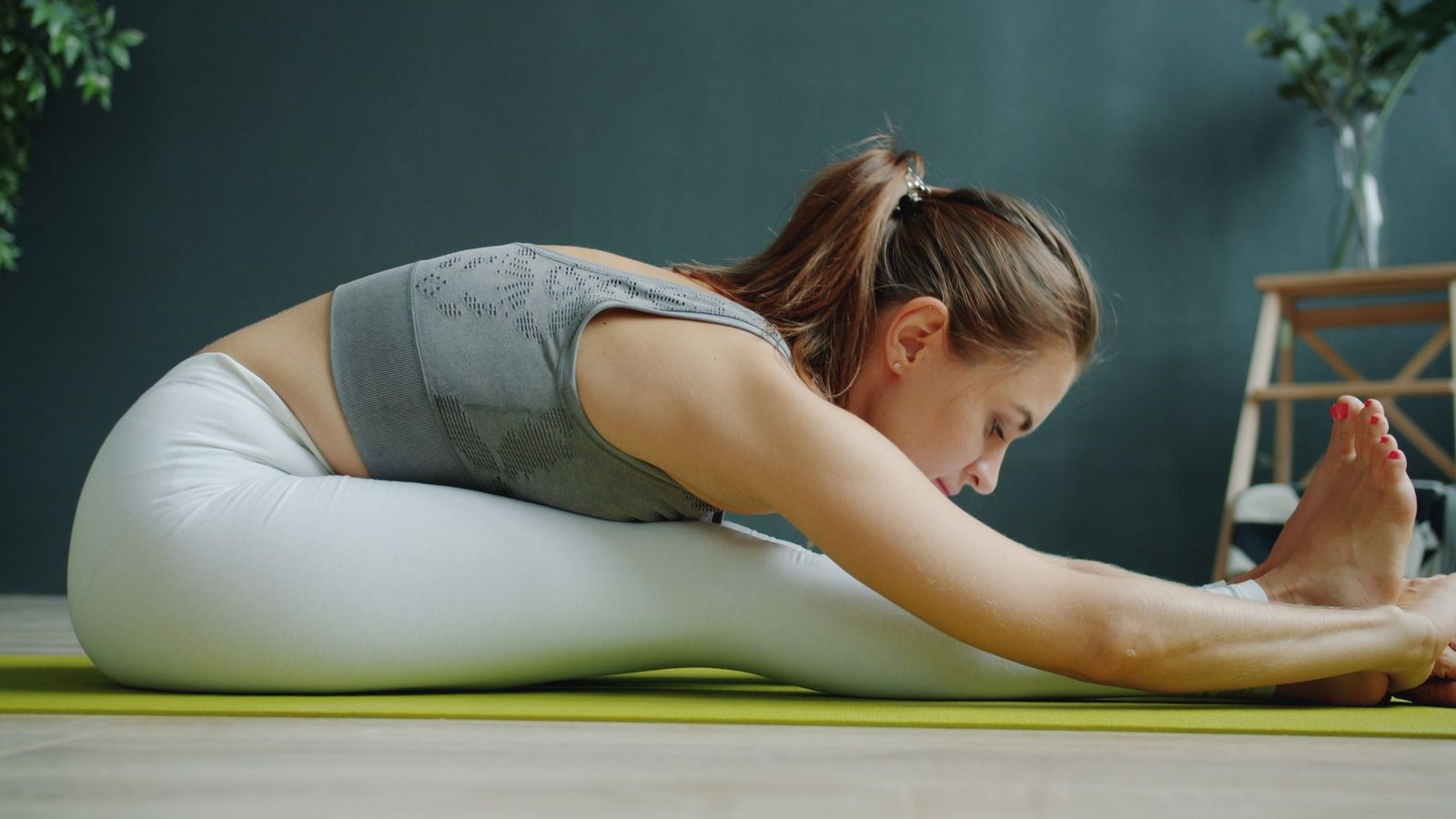
- Hamstring stretch on a chair — 45 seconds per side: hinge from the hips with a long spine.
- Doorway chest stretch — 45 seconds per side: keep the shoulder relaxed away from the ear.
- Child’s pose with side reach — 45 seconds per side: breathe into the side of the rib cage.
If kneeling is uncomfortable, use a standing hip-flexor variation. If balance is limited, keep a hand on a stable support.
Make the habit easier to keep
Use a minimum version
On busy days, complete one round of two priority stretches. A two-minute routine maintains the cue and avoids the all-or-nothing trap.
Track attendance, not flexibility
Mark each completed session on a calendar. Range of motion varies from day to day, so constantly testing your deepest position can be discouraging and may lead to forcing.
Progress one variable
Add time, a second set, or an extra day—not all three at once. When a position becomes easy, adjust the angle slightly or use a more specific variation.
Should you stretch before training?
Before explosive or heavy exercise, prioritize a progressive dynamic warm-up. Short static stretches are unlikely to ruin performance, but long intense holds immediately before maximal efforts can temporarily reduce force or power. If a static stretch helps you reach a needed position, follow it with active movement and rehearsal sets.
Our 10-minute dynamic warm-up is a better starting point immediately before exercise.
When to stop
A stretch should create tension, not sharp pain, pins and needles, numbness, or a feeling of instability. Stop if symptoms travel down an arm or leg. Be cautious after recent injury, surgery, or joint dislocation, and follow guidance from your clinician.
Make the habit easier than the excuse
A stretching habit survives busy weeks when the minimum version is small. Decide in advance what counts on a difficult day—perhaps two priority stretches for two minutes. Completing the minimum keeps the routine attached to its cue and makes it easier to return to the longer version later.
This matters more than trying to create a perfect daily streak. Missing one day is normal. The useful skill is restarting at the next opportunity without turning a missed session into a lost week.
Measure progress without forcing it
Retest the same comfortable position every few weeks rather than every day. Daily range changes with fatigue, temperature, and previous training, so constant testing can encourage you to push harder just to reproduce yesterday’s result.
- Use the same setup when you compare progress.
- Notice comfort and control, not only maximum distance.
- Record whether the new range transfers to training or daily activities.
- If nothing meaningful changes after several weeks, adjust the exercise rather than simply adding more time.
What to do when the habit plateaus
If a stretch no longer feels challenging, you can increase the range slightly, add a second set, or replace some passive stretching with active or loaded work. You do not need to keep extending every hold indefinitely.
The long-term goal is not to spend more and more time stretching. It is to maintain enough range for the activities you value with a routine that remains easy to live with.
Attach stretching to a stable cue
Habits are easier to maintain when they start after something that already happens. Stretch after your morning coffee, after brushing your teeth at night, or immediately after a regular training session. The cue matters more than motivation because it removes the need to decide when the routine should happen.
Use a two-level routine
- Minimum version: two priority stretches for about two minutes total.
- Full version: 8–12 minutes covering the movements you want to maintain or improve.
On busy days, complete the minimum. On normal days, complete the full version. This prevents the common all-or-nothing pattern where missing a long routine makes the habit disappear for a week.
Review the exercise selection every month or two. A habit can be consistent and still be poorly targeted; keep the routine connected to the activities and ranges that matter to you.
Training note: Consistency comes from making the routine easy to restart. Never require a perfect streak for the habit to count.
Sources and further reading
- Chronic static stretching and muscular performance: meta-analysis
- Long-term static stretching and muscle stiffness: meta-analysis
- Strength training versus stretching for range of motion
General exercise information only. Adapt the routine to your health and mobility.