
Mobility is one of the most underrated foundations of physical performance. Whether you’re lifting weights, running, doing CrossFit, or simply trying to stay active without pain, mobility determines how well your body moves through space. Good mobility supports posture, strength, recovery, and everyday comfort. Poor mobility leads to stiffness, compensation patterns, reduced power output, and eventually injuries.
In this complete mobility guide, you’ll learn exactly what mobility is, how it works, why it matters, and how you can improve it through structured exercises and routines. This blueprint is designed for everyone—from beginners who want to feel better in their daily movement, to active people who need more range of motion, and even advanced athletes looking for performance mobility.

What Mobility Actually Is (And What It Isn’t)
Most people confuse mobility with stretching—but they are not the same. Stretching improves flexibility (passive range of motion), while mobility improves your active control over movement.
Mobility = strength + control + usable range of motion.
Flexibility alone doesn’t help if you can’t control the end range. Mobility training teaches your joints to move smoothly under tension, improves the quality of movement, and builds stability around each joint.
Mobility vs Flexibility vs Stretching
| Flexibility | Passive range of motion (like reaching your toes) |
| Mobility | Active, controlled range of motion with strength |
| Stretching | A method to improve flexibility, not necessarily mobility |
Mobility is the combination of coordination, strength, control, flexibility, and motor learning. Improving mobility makes every movement easier, safer, and more efficient.
The 7 Principles of Effective Mobility Training
To get real results, mobility training must follow specific principles. These principles turn random stretching into meaningful, long-term mobility improvements.
1. Controlled Slow Movement
Mobility is not fast or explosive. Controlled tempo helps your nervous system learn safe movement patterns and gives muscles time to activate.
2. End-Range Strength
Your body must feel strong at your limits. Without strength at end range, flexibility doesn’t translate into mobility.
3. Joint-Focused Training
Each joint has its own movement pattern. True mobility targets these individually: ankle dorsiflexion, hip external rotation, thoracic extension, etc.
4. Consistency Over Intensity
Small amounts of mobility done daily (5–10 minutes) outperform one intense 45-minute session per week.
5. Active, Not Passive
Mobility is built through active contraction—stretching alone doesn’t create long-term improvement.
6. Gradual Load Progression
Weighted mobility (like goblet squat mobility or Cossack squats) turns flexibility into usable strength.
7. Breath-Control Integration
Your breath controls your nervous system, which controls your movement. Calm breathing = improved mobility access.
Why Mobility Training Matters
Mobility training is essential because it directly influences:
- Posture – mobility opens stiff joints and restores natural alignment
- Strength – better joint angles = higher power output
- Movement quality – smoother, more efficient movement
- Injury prevention – stable joints reduce strain on muscles
- Training capacity – better mobility allows better technique
- Recovery – movement helps tissues regenerate faster
This is why elite athletes include mobility work daily—not because they are flexible, but because mobility lets them perform at a higher level.
The Body’s Mobility System: How It Actually Works
Mobility is not just about muscles. It involves four major systems that must work together:
1. The Joint Itself
Each joint has a natural movement pattern. When joints become restricted, other parts of the body compensate.
2. The Muscles & Tendons
Tight or weak muscles limit mobility—both must be trained correctly.
3. The Nervous System
Your brain allows or restricts movement based on perceived safety. Calm breathing and slow movement improve access to range of motion.
4. The Fascia
The connective tissue that wraps muscles influences glide, tension, and functional movement. Foam rolling influences this system.
Mobility training works because it addresses all four systems at once.
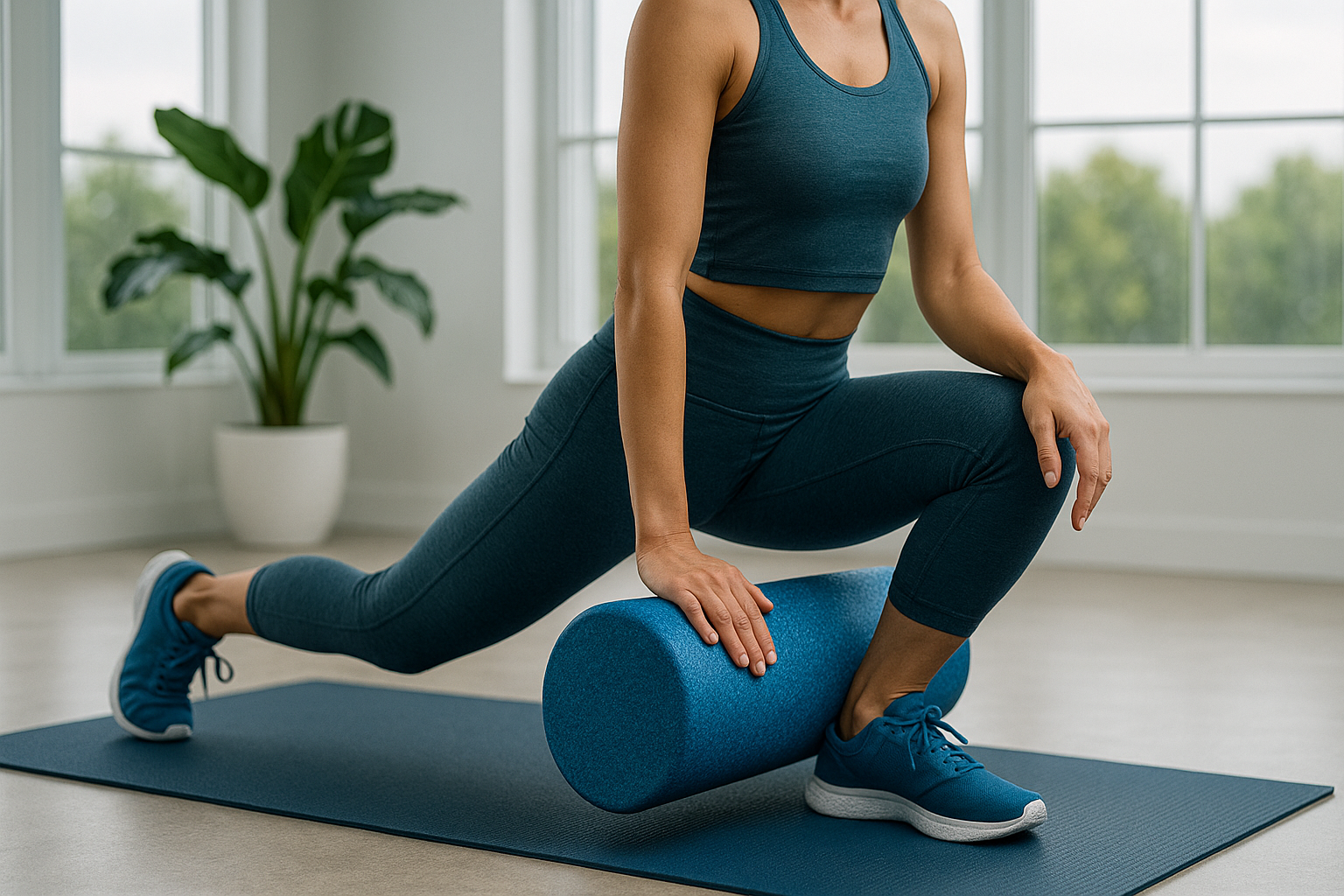
The Mobility Map: Understanding Each Major Joint
Every human body has five major mobility hubs. When one of these areas becomes restricted, movement everywhere else is affected. These hubs are:
- Ankle mobility
- Hip mobility
- Thoracic spine mobility
- Shoulder mobility
- Neck & upper back control
In the next section, we break down each hub with:
– what limits the joint
– how to test your mobility
– how to improve it with 100% safe exercises
– beginner → advanced versions
Mobility Map: The Five Major Movement Hubs
To improve your mobility effectively, you must understand how the body’s main joints influence movement. These five “mobility hubs” determine how well you squat, hinge, rotate, run, lift, and move in daily life. When one hub becomes restricted, the body compensates somewhere else—usually causing stiffness, pain, or reduced performance.
This section breaks down each hub, how to test it, what limits it, and the most effective exercises to improve it.
1. Ankle Mobility
Ankle dorsiflexion (the ability to bring your knee forward over your foot) is the foundation of nearly every lower-body movement. Strong ankle mobility improves squatting, running, lunging, jumping, and even posture.
Why Ankle Mobility Matters
- Improves squat depth without the heels lifting
- Reduces knee strain during lunges and running
- Increases power output in jumps
- Prevents overpronation and foot collapse
What Limits Ankle Mobility?
- Tight calves (especially the soleus)
- Weak tibialis anterior
- Stiff ankle joint capsule
- Previous ankle sprains
Test Your Ankle Mobility (Knee-to-Wall Test)
Stand facing a wall with your big toe 10–12 cm away. Keep your heel on the ground and try to touch your knee to the wall.
| Result | Meaning |
| 10+ cm | Excellent mobility |
| 6–9 cm | Average mobility |
| 0–5 cm | Restricted mobility — needs training |
Best Ankle Mobility Drills
- Half-Kneeling Dorsiflexion Rocks (active joint work)
- Soleus Stretch with Knee Bent (targets the real limiter)
- Weighted Knee-Over-Toe Mobility
- Tibialis Raises (strengthens the front of the shin)
2. Hip Mobility
Your hips are the largest joint complex in your body. They control rotation, squatting, hinging, stride length, and stability. When hip mobility is restricted, the lower back and knees take the load.
Why Hip Mobility Matters
- Improves squat and deadlift technique
- Reduces lower-back tightness
- Improves running stride and efficiency
- Allows safe hip hinge mechanics
What Limits Hip Mobility?
- Tight hip flexors from sitting
- Weak glutes
- Stiff internal/external rotation
- Restricted capsule movement
Observation: Internal rotation is the most neglected part of hip mobility. People stretch their hip flexors frequently, but almost no one trains internal rotation strength. But when they finally do, their squats, lunges, and hinging patterns become smoother and more stable.
Hip Mobility Test (90/90 Test)
Sit on the ground with your front leg in a 90° angle and the rear leg also in 90°. Try lifting your hands off the ground without leaning.
| Result | Meaning |
| Upright torso | Great hip rotation |
| Moderate lean | Average mobility |
| Strong lean / tipping | Restricted rotation — needs training |
Best Hip Mobility Drills
- 90/90 Transitions
- Hip CARs (Controlled Articular Rotations)
- Front-Foot Elevated Split Squat (active hip flexor mobility)
- Pigeon Mobility Flow (glute + rotation)
3. Thoracic Spine Mobility (Upper Back Rotation & Extension)
The thoracic spine should rotate and extend smoothly. When it becomes stiff (usually from sitting, driving, and desk work), the lower back and shoulders compensate.
Why Thoracic Mobility Matters
- Improves shoulder mechanics
- Reduces back pain
- Helps breathing quality
- Enhances posture and running form
Common Limiters
- Rounded posture
- Sitting for long periods
- Weak mid-back muscles
- Stiff ribcage
Best Exercises
- Open Book Rotations
- Cat-Cow with Thoracic Focus
- Bench Thoracic Extension
- Side-Lying Thoracic Reach
4. Shoulder Mobility
Shoulders rely on mobility AND stability. They need good control overhead, behind the back, and across the body. Lack of shoulder mobility limits pressing, pulling, rotation, and posture.
Why Shoulder Mobility Matters
- Improves overhead lifting
- Allows safer pressing technique
- Reduces neck tension
- Improves posture & breathing
Best Shoulder Drills
- Shoulder CARs
- Wall Slides
- Band Dislocations
- Prone Y-T-W’s
5. Neck & Upper Back Control
This area influences breathing, posture, shoulder function, and even lower back load. Training control—not flexibility—is the key here.
Best Drills
- Chin Tucks with Reach
- Neck CARs
- Wall Posture Reset
The 10 Foundational Mobility Drills Everyone Should Learn
These exercises form the backbone of any effective mobility routine. They target every major joint and teach the body how to access safe, strong, active ranges of motion.
- Ankle Dorsiflexion Rocks – restores ankle movement
- Soleus Wall Stretch – improves squat depth
- 90/90 Hip Rotations – foundational hip mobility
- Hip CARs – improves control and stability
- Pigeon Flow – glute & rotation mobility
- Lunge Hip Flexor Stretch – corrects tight hips
- Thoracic Open Books – improves rotation
- Wall Slides – shoulder mobility essential
- Cat-Cow with End-Range Focus – spine control
- Deep Squat Hold – integrated whole-body mobility
In the next part, we build these movements into structured routines for beginners, intermediate, and advanced levels.
Daily Mobility Flows (5, 10 and 20 Minutes)
You don’t need long sessions to improve mobility. Consistency matters more than intensity. These three flows—5, 10, and 20 minutes—are built around the foundational drills you learned earlier. Use the version that fits your schedule, and switch between them depending on how your body feels.
5-Minute Mobility Flow (Fast Reset)
This routine is perfect for busy days, before a workout, or when you’ve been sitting for too long.
- Cat-Cow with End-Range (40 sec)
- Ankle Rocks (40 sec each leg)
- Hip 90/90 Hold (40 sec each side)
- Thoracic Open Book (40 sec each side)
Total time: ~5 minutes.
Use this flow anytime during the day to reset posture and open stiff joints.
10-Minute Mobility Flow (Daily Maintenance)
This routine balances joint preparation, flexibility, and end-range strength. It’s ideal as a warm-up or an evening reset.
- Deep Squat Hold – 1 minute
- Ankle Dorsiflexion Rocks – 1 minute each leg
- 90/90 Transitions – 1 minute
- Hip Flexor Lunge Stretch – 1 minute each side
- Thoracic Bench Extension – 1 minute
- Wall Slides – 1 minute
Total time: ~10 minutes. Recommended: Improve Flexibility and Mobility: The Ultimate Guide for Better Movement
20-Minute Mobility Flow (Full Body Improvement)
This is the gold standard for long-term mobility progress. It targets every major mobility hub with slow, controlled movements. Learn more: Mobility Training at Home: Improve Flexibility and Joint Health Easily
- Deep Breathing (1 min) – nasal, calm, long exhales
- Couch Stretch – 2 min each side
- Weighted Knee-Over-Toe Mobility – 2 min
- Hip CARs – 2 min each side
- 90/90 Transitions – 3 min
- Thoracic Rotation Flow – 3 min
- Shoulder CARs – 2 min each side
Total time: ~20 minutes.
Do this 2–3 times per week for the best results.
Mobility Programs: Beginner, Intermediate, Advanced
These structured programs help you grow from basic joint control to advanced, strong, usable mobility. Choose your level—or progress through them step-by-step.
Beginner Level (10–15 Minutes, 3–4× Weekly)
This level helps you build awareness, control, and basic range of motion.
- Cat-Cow – 1 min
- Ankle Rocks – 1 min each leg
- 90/90 Seated Hold – 1 min each side
- Lunge Hip Flexor Stretch – 1 min each side
- Wall Slides – 1 min
- Deep Squat Hold – 1–2 min
Goal: Master control of basic joints and build daily consistency.
Intermediate Level (15–20 Minutes, 3–5× Weekly)
This level adds rotation, strength, and controlled range of motion.
- Thoracic Open Books – 1 min each side
- Hip CARs – 2 min each leg
- 90/90 Transitions – 2 min
- Soleus Stretch – 2 min
- Weighted Knee-Over-Toe – 2 min
- Pigeon Flow – 2 min each side
Goal: Improve deep rotational control and joint-specific strength.
Advanced Level (20–30 Minutes, 4–6× Weekly)
This level integrates mobility with strength, load, and complex movement patterns. Perfect for athletes, lifters, and active individuals who want high-performance mobility.
- Loaded Cossack Squats – 2–3 min
- Long Lunge Isometrics – 2 min each leg
- Full Hip CARs – 2 min each side
- Jefferson Curl (light weight) – 2 min
- Prone Y-T-W – 3 min
- Advanced Thoracic Rotation Flow – 3 min
Goal: Build end-range strength and high-quality, athletic mobility.
Mobility for Desk Workers (The Sitting Reset)
Sitting for long periods shortens the hip flexors, stiffens the thoracic spine, locks the shoulders forward, and weakens the glutes. Here is the most effective mobility reset designed specifically for people who sit a lot during the day.
Desk Worker Reset (6–8 Minutes)
- Chin Tuck + Reach – 40 sec
- Seated Thoracic Rotation – 40 sec each side
- Standing Hip Flexor Stretch – 1 min each side
- Wall Slides – 1 min
- Deep Squat Hold – 1–2 min
Do this once or twice daily if you sit for more than 4 hours.
Breathing & the Nervous System: The Missing Mobility Key
Most people overlook that mobility is controlled by the nervous system, not just by muscles or joints. Your brain restricts movement when it senses threat, instability, or stress. This is why stress and poor breathing make your body feel stiff.
Calm breathing = more mobility.
Mobility Breathing Protocol (90 Seconds)
Use nasal breathing:
- Inhale 4 seconds
- Exhale 6–8 seconds
- Slow, quiet, controlled breaths
Do this before mobility work or between exercises to increase range of motion safely.
How to Integrate Mobility Into Your Workouts
Mobility training works best when paired with your regular training routine. Here’s how to use it before and after workouts:
Before Training (Warm-Up)
- 1–2 ankle mobility drills
- 1 hip rotation drill
- 1 thoracic opener
This prepares your joints for movement and improves technique.
After Training (Cool-Down)
- Hip flexor stretch
- Pigeon flow
- Thoracic extension
This reduces stiffness and improves recovery.
On Rest Days
- 10-minute full-body mobility flow
- Low-intensity walking
- Foam rolling or light stretching
Rest days are prime time for mobility improvements.
In the next part, we build:
- Full 30-day mobility progression
- Recovery tools to boost mobility
- Internal linking cluster
- Complete schema markup
- SEO title, focus keyword & meta description
30-Day Mobility Progression Plan
This 30-day plan gradually increases mobility volume, control, and end-range strength. It’s designed for anyone—from beginners to active people—to build long-lasting, meaningful changes in movement quality.
Structure:
- Weeks 1–2: Awareness, basic mobility control
- Weeks 3–4: Strength, rotation, and advanced variations
Week 1: Foundation & Awareness (10 minutes/day)
- Day 1: 90/90 Hold, Cat-Cow, Ankle Rocks
- Day 2: Thoracic Open Book, Wall Slides, Lunge Stretch
- Day 3: Deep Squat Hold, Ankle Rocks, Hip Flexor Stretch
- Day 4: Repeat Day 1
- Day 5: Repeat Day 2
- Day 6: Repeat Day 3
- Day 7: Rest or a gentle 5-min mobility flow
Week 2: Increasing Range (12–15 minutes/day)
- Day 8: 90/90 Transitions, Hip CARs, Ankle Mobility
- Day 9: Thoracic Bench Extension, Wall Slides, Pigeon Flow
- Day 10: Deep Squat Hold + Rotation, Knee-over-Toe
- Day 11–13: Repeat cycle
- Day 14: Rest or a 5-min mobility flow
Week 3: Strength at End Range (15–20 minutes/day)
- Day 15: Hip CARs (advanced), Cossack Squat, Pigeon Flow
- Day 16: Jefferson Curl (light), Thoracic Rotation Flow
- Day 17: Long Lunge Isometrics, Ankle Mobility Strength
- Day 18–20: Repeat cycle
- Day 21: Rest day + slow breathing
Week 4: Full Body Integration (20–25 minutes/day)
- Day 22: Weighted Knee-Over-Toe + Hip CARs
- Day 23: Advanced Thoracic Flow + Wall Slides
- Day 24: Loaded Cossack Squat + Jefferson Curl
- Day 25–27: Repeat cycle
- Day 28: Full 20-min mobility flow
- Day 29: Deep Recovery Day (foam rolling + light stretching)
- Day 30: Retest mobility b Recommended: Are Resistance Bands Good for Recovery? Benefits & How Recommended: Mobility Training for Recovery: Expert Tips & Key Takeawaysto Useaselines (ankle, hip, T-spine)
After 30 days: Continue with intermediate or advanced routines based on your needs.
Mobility Tools That Actually Work
You don’t need expensive equipment for mobility. These simple tools are proven to increase range of motion, reduce stiffness, and improve joint control.
1. Foam Roller
Best for releasing muscle tension and improving tissue quality.
See our full guide:
Best Recovery Tools for Home
2. Lacrosse / Massage Ball
Targets smaller muscle areas like glutes, pecs, upper traps, and feet.
3. Resistance Bands
Used for shoulder mobility, activation, and improving end-range control.
Also see:
Resistance Bands for Recovery
4. Yoga Blocks
Helps support the body in difficult stretches and mobility positions.
5. Small Weights (2–10 kg)
Used for loaded stretching, Jefferson curls, and Cossack squats.
How Mobility Affects Strength, Pain, and Performance
Mobility isn’t only about flexibility. It directly affects strength, stability, and training safety. Here’s how:
- Strength: Better joint angles = stronger lifts
- Pain Reduction: Mobility removes unnecessary tension
- Performance: Efficient movement increases power
- Technique: Good mobility = smoother patterns
- Recovery: Better tissue glide = faster recovery
Good mobility is a superpower that enhances every aspect of fitness.
Internal Links
- Post-Workout Recovery Routine
- How to Relieve Sore Muscles Fast
- Best Recovery Tools for Home
- Stretching for Beginners
- Resistance Bands for Recovery
Conclusion
Mobility is the foundation of healthy, powerful, efficient movement. Whether you’re a beginner looking to move better, an active person wanting to feel less stiff, or an athlete chasing performance gains, mobility offers a direct path toward better results. With consistent practice—even just 5–10 minutes a day—you can dramatically improve how your body feels and functions.
This mobility blueprint gives you everything you need: daily routines, beginner-to-advanced programs, mobility flows, breathing strategies, and a full 30-day progression. Your body will thank you for the investment.
{
“@context”:”https://schema.org”,
“@type”:”Article”,
“headline”:”The Complete Mobility Training Blueprint (Beginner to Advanced)”,
“description”:”A complete mobility training blueprint with joint-by-joint breakdowns, daily flows, and a 30-day progression for better movement, less stiffness, and improved performance.”,
“author”:{
“@type”:”Organization”,
“name”:”Recorefit Editorial Team”
},
“publisher”:{
“@type”:”Organization”,
“name”:”Recorefit”,
“logo”:{
“@type”:”ImageObject”,
“url”:”https://recorefit.com/wp-content/uploads/recorefit-logo.png”
}
},
“image”:[
“https://recorefit.com/wp-content/uploads/2025/12/Woman-Using-Foam-Roller-for-Deep-Muscle-Recovery-in-Modern-Gym.png”,
“https://recorefit.com/wp-content/uploads/2025/12/Woman-Performing-Deep-Muscle-Recovery-Training-with-Foam-Roller-in-Bright-Gym.png”
],
“mainEntityOfPage”:{
“@type”:”WebPage”,
“@id”:”https://recorefit.com/mobility-training-blueprint/”
},
“datePublished”:”2025-12-10″,
“dateModified”:”2025-12-15″
}