Home Workout Recovery: The Complete Guide to Faster Muscle Repair (2025)
Many home fitness enthusiasts train hard — then forget what happens after. But recovery is not a bonus. It’s the part of the process where your body adapts, rebuilds, and comes back stronger.
If recovery falls behind, even the best home workouts can lead to burnout, nagging soreness, plateaus, and avoidable injuries. The good news? Home training actually gives you a recovery advantage: you control your environment, your nutrition access is immediate, and your recovery tools are always nearby.
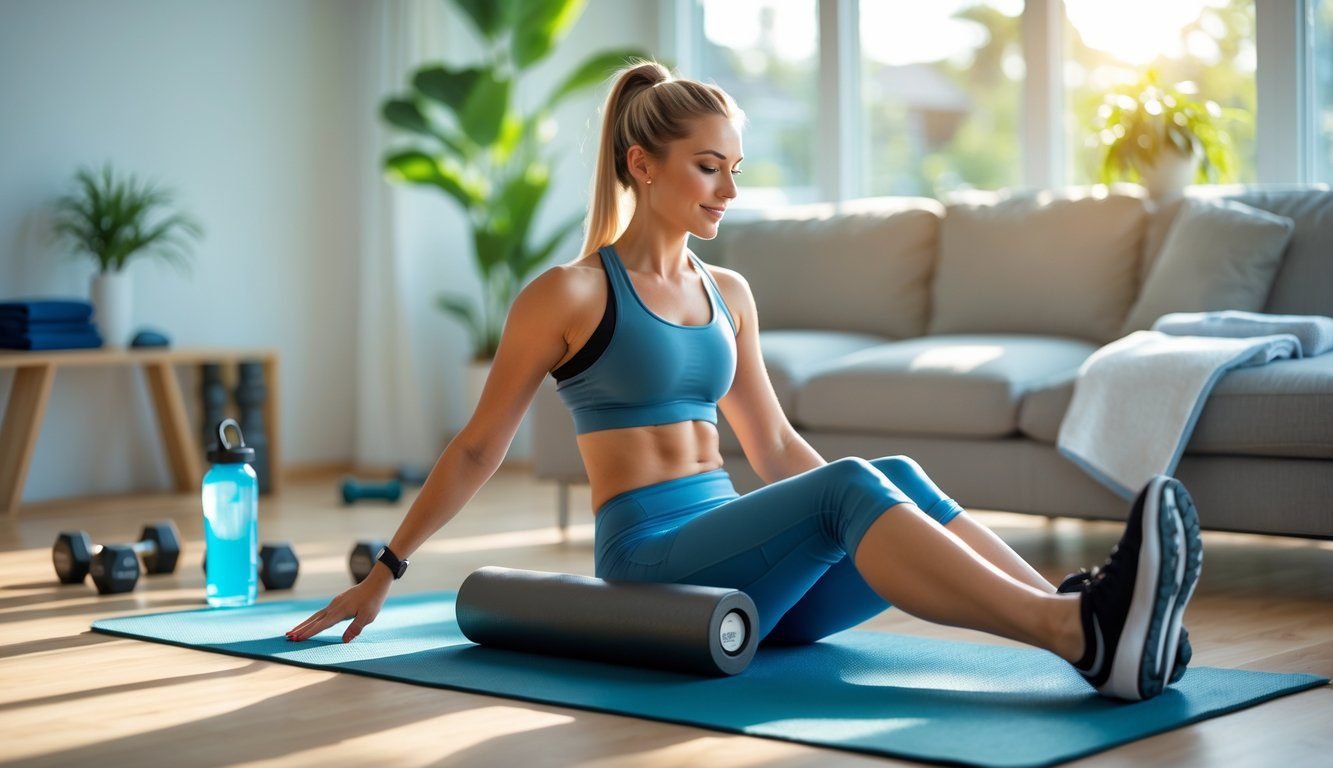
In this guide, you’ll learn: exactly what recovery is, what to do in the first hour post-workout, how to structure recovery days, how to sleep and eat for repair, and how to use tools like foam rollers and bands without turning recovery into another workout.
Key Takeaways
- Recovery starts immediately: what you do in the first 60 minutes can improve how you feel tomorrow.
- Sleep + protein are the foundation: most people under-recover because they under-sleep and under-eat.
- Active recovery beats complete rest for most soreness: light movement improves circulation and stiffness.
- Mobility + soft-tissue work keeps joints moving well and reduces “tight” patterns from repetitive training.
- Tools help, but they’re not magic: foam rolling, heat/cold, and bands work best when used consistently and gently.
What Home Workout Recovery Actually Is
Recovery begins the moment you finish your last rep. Training creates stress (mechanical tension, metabolic fatigue, and microscopic muscle damage). Recovery is the process where your body repairs tissues, refuels energy stores, and resets the nervous system so you can train again.
Home workout recovery is not “doing nothing.” It’s a set of simple actions you repeat consistently that help your body return to baseline — and adapt upward.
The three layers of recovery
- Muscle repair: rebuilding muscle fibers through protein synthesis
- Energy restoration: refilling glycogen (carbohydrate stores) and rehydrating
- Nervous system reset: restoring coordination, readiness, and motivation
If you want the deeper science version, see: The Science of Muscle Recovery: What Actually Works.
The 60-Minute Recovery Window After a Home Workout
You don’t need a complicated routine. You need a reliable sequence. Here’s a simple framework you can follow after almost any home workout.
Step 1: 2–5 minutes to downshift
- Walk slowly around the room or do gentle cycling/step-ups
- Breathe through your nose if possible
- Bring heart rate down gradually
Step 2: Hydrate (and add electrolytes when needed)
Drink water after training, especially if you sweat heavily or train in a warm room. If the session was long, high-intensity, or very sweaty, consider electrolytes.
Step 3: Eat a recovery meal or snack
Within 60 minutes, aim for a simple combo of protein + carbs. This supports muscle repair and glycogen restoration. (More on exact amounts below.)
Step 4: 5–10 minutes of gentle mobility or tissue work
Keep it easy. The goal is to restore range of motion and reduce stiffness — not to “destroy” sore muscles.
Need a done-for-you format? Use: Post-Workout Recovery Routine.
Active Recovery: Why Light Movement Works Better Than Total Rest
Active recovery means doing light movement instead of complete rest. For most people, it reduces stiffness faster than sitting still. Light movement improves blood flow, which helps tissues recover and often makes soreness feel “looser.”
Active recovery should feel easy. If it feels like training, you’re doing too much.
Simple active recovery options at home
- Easy walk (10–20 minutes)
- Gentle mobility flow (8–12 minutes)
- Very light band work (see bands section below)
- Low-intensity cycling (if you have a bike or machine)
Best time to do it
- After training: 5–10 minutes
- On rest days: 10–25 minutes
- When sore: short sessions spread through the day
If soreness is your main issue, also read: How to Relieve Sore Muscles Fast.
Sleep: The #1 Recovery Tool (That Most People Underestimate)
Sleep is where the recovery “magic” happens — not because of hype, but because deep sleep supports tissue repair, hormone regulation, immune function, and nervous system restoration.
Most adults do best with 7–9 hours. If you train hard and your life stress is high, you may need more.
Sleep quality checklist
- Consistent schedule: same bedtime/wake time most days
- Cool room: slightly cooler tends to support deeper sleep
- Dark + quiet: reduce light and noise
- Screen cutoff: aim for 30–60 minutes before bed
- Caffeine timing: avoid late afternoon/evening caffeine if sleep suffers
Practical reality: if you can only improve one thing this week, add 30–60 minutes of sleep. Many people notice less soreness within days.
Nutrition for Faster Recovery at Home
Post-workout nutrition doesn’t have to be perfect. But it should be consistent. Your muscles need amino acids (protein) to rebuild and carbohydrates to refuel. If you chronically under-eat, recovery slows and motivation drops.
How much protein?
As a simple recovery target, aim for 20–40g protein in your post-workout meal/snack (depending on body size and total daily protein). Spread protein across the day too — not just once.
How many carbs?
If you train several times per week or do intense sessions, carbs matter for performance and recovery. A practical post-workout range is 30–70g carbs, depending on session intensity and your goals.
Quick recovery meal ideas
- Greek yogurt + berries + granola
- Protein smoothie + banana
- Eggs + toast + fruit
- Chicken/rice bowl or tuna sandwich
- Chocolate milk + a banana (simple and effective)
Want an overall recovery system beyond food? Combine this with: Recovery After Strength Training.
Mobility and Stretching: What to Do (and What to Avoid)
Mobility is about control in range of motion — not just pulling harder. Stretching is useful, but aggressive stretching on very sore muscles can irritate tissue. Keep it gentle.
Post-workout stretching (simple approach)
- Hold each stretch 20–45 seconds
- Choose 2–4 muscles you trained
- Stay in a comfortable range (no sharp pain)
Mobility when you feel “stiff”
On recovery days, mobility flows often feel better than long static holds. For a complete guide, see: Improve Flexibility and Mobility. Recommended: Mobility Training for Recovery: Expert Tips & Key Takeaways
If you want a beginner-friendly starting point: Stretching for Beginners.
Recovery Tools at Home: What Helps Most
Tools can speed up recovery and reduce soreness — but only if you use them consistently and correctly. Think of tools as “support,” not a replacement for sleep and nutrition.
Foam rolling (simple, effective, easy to overdo)
Foam rolling helps reduce the feeling of tightness and can temporarily improve range of motion. Do it gently for 5–10 minutes after training or on rest days.
- Roll slowly
- Pause 15–25 seconds on tender spots
- Avoid rolling directly on joints or painful injuries
Guide here: Foam Rolling Technique.
Lacrosse ball / trigger point work
Great for smaller areas (glutes, upper back, feet). Keep pressure tolerable and avoid numbness/tingling.
Heat vs cold
- Heat: relaxes tissue, often feels great for stiffness (hot shower, bath, heating pad)
- Cold: can reduce soreness perception and calm inflammation (cold shower, ice pack)
Use what helps you feel better and move better — then return to gentle movement.
Resistance bands for recovery
Bands are excellent for active recovery and rehab-style strengthening (low joint stress, high control). Related: Are Resistance Bands Good for Recovery?
A Simple Weekly Recovery Structure for Home Workouts
If you want progress without burnout, you need a rhythm. Here’s a simple template you can adapt:
Option A: 3 training days
- Mon: Train + 10 min recovery routine
- Tue: Active recovery (walk + mobility)
- Wed: Train + light stretching
- Thu: Rest or active recovery
- Fri: Train + foam rolling
- Sat: Mobility flow (10–20 min)
- Sun: Full rest (or easy walk)
Option B: 4–5 training days
- Alternate hard and moderate days
- Include 1–2 low-intensity recovery sessions weekly
- Prioritize sleep on the hardest training days
Rule of thumb: if soreness is worsening week to week, recovery is not matching load.
Monitoring Recovery Without Overthinking It
You don’t need expensive tech. You need awareness. Track a few simple markers:
- Energy: do you feel ready, or drained?
- Soreness: mild is fine; severe that limits movement is a warning
- Sleep quality: waking up exhausted repeatedly is a red flag
- Performance: strength/coordination dropping for 2+ sessions suggests under-recovery
- Motivation: constant dread is often fatigue, not laziness
If you like metrics, HRV can be helpful — but don’t let numbers override how your body actually feels.
Frequently Asked Questions
What are the most effective recovery exercises after a home workout?
Easy walking, gentle mobility flows, and light stretching are usually the best options. Keep intensity low and focus on feeling better, not doing more work.
How long should a recovery session be?
Most people do well with 10–25 minutes. Short, frequent sessions beat rare long sessions.
Should I stretch immediately after training?
Light stretching is fine. Avoid aggressive stretching when extremely sore. If you feel stiff the next day, do a gentle mobility flow instead.
What should I eat after a home workout?
Aim for protein + carbs within 60 minutes. Simple choices like yogurt + fruit, a smoothie, eggs + toast, or chicken + rice work well.
What’s the fastest way to reduce sore muscles?
Sleep, hydration, protein, and light movement are the biggest levers. Foam rolling and heat can help you feel looser, especially when paired with walking.
Related Articles
Boost flexibility during recovery with Stretching for Beginners.
Relieve sore muscles fast with How to Relieve Sore Muscles Fast.
For deeper tissue release, see Foam Rolling Technique.
Improve joint mobility with Improve Flexibility and Mobility.
{
“@context”: “https://schema.org”,
“@type”: “Article”,
“headline”: “Home Workout Recovery: The Complete Guide to Faster Muscle Repair (2025)”,
“description”: “Learn how to recover faster after home workouts with sleep, nutrition, mobility, active recovery, and proven tools. A complete at-home recovery system.”,
“author”: { “@type”: “Organization”, “name”: “Recorefit Editorial Team” },
“publisher”: {
“@type”: “Organization”,
“name”: “Recorefit”,
“logo”: { “@type”: “ImageObject”, “url”: “https://recorefit.com/wp-content/uploads/2025/01/recorefit-logo.png” }
},
“mainEntityOfPage”: { “@type”: “WebPage”, “@id”: “https://recorefit.com/home-workout-recovery/” }
}
{
“@context”: “https://schema.org”,
“@type”: “FAQPage”,
“mainEntity”: [
{
“@type”: “Question”,
“name”: “What are the most effective recovery exercises after a home workout?”,
“acceptedAnswer”: {
“@type”: “Answer”,
“text”: “Easy walking, gentle mobility flows, and light stretching are usually the best options. Keep intensity low and focus on feeling better, not doing more work.”
}
},
{
“@type”: “Question”,
“name”: “How long should a recovery session be?”,
“acceptedAnswer”: {
“@type”: “Answer”,
“text”: “Most people do well with 10–25 minutes. Short, frequent sessions beat rare long sessions.”
}
},
{
“@type”: “Question”,
“name”: “What should I eat after a home workout?”,
“acceptedAnswer”: {
“@type”: “Answer”,
“text”: “Aim for protein plus carbohydrates within 60 minutes. Simple choices like yogurt and fruit, a smoothie, eggs and toast, or chicken and rice work well.”
}
},
{
“@type”: “Question”,
“name”: “What’s the fastest way to reduce sore muscles?”,
“acceptedAnswer”: {
“@type”: “Answer”,
“text”: “Sleep, hydration, protein, and light movement are the biggest levers. Foam rolling and heat can help you feel looser, especially when paired with walking.”
}
}
]
}