
Stretching doesn’t require advanced flexibility. Start with basic, stable positions, use a comfortable intensity, and practice consistently to help your body adapt gradually.
How stretching should feel
A useful stretch feels like steady tension in the target area. The sensation may increase slightly during the first seconds, then settle. Sharp pain, burning, numbness, pins and needles, or joint pressure are reasons to ease out.
Avoid bouncing. Move into the position gradually and keep enough support that you can relax rather than fight for balance.
When should beginners stretch?
For a dedicated flexibility session, begin with a few minutes of walking or easy movement. After exercise is also convenient because you are already warm. Before a workout, use dynamic movements and rehearsal sets; save longer static holds for afterward or another time.
A 10-minute beginner routine
Perform one round initially. After two weeks, add a second round to the areas that matter most to you.
- Calf stretch at a wall — 30 seconds per side: back heel down, knee straight, toes forward.
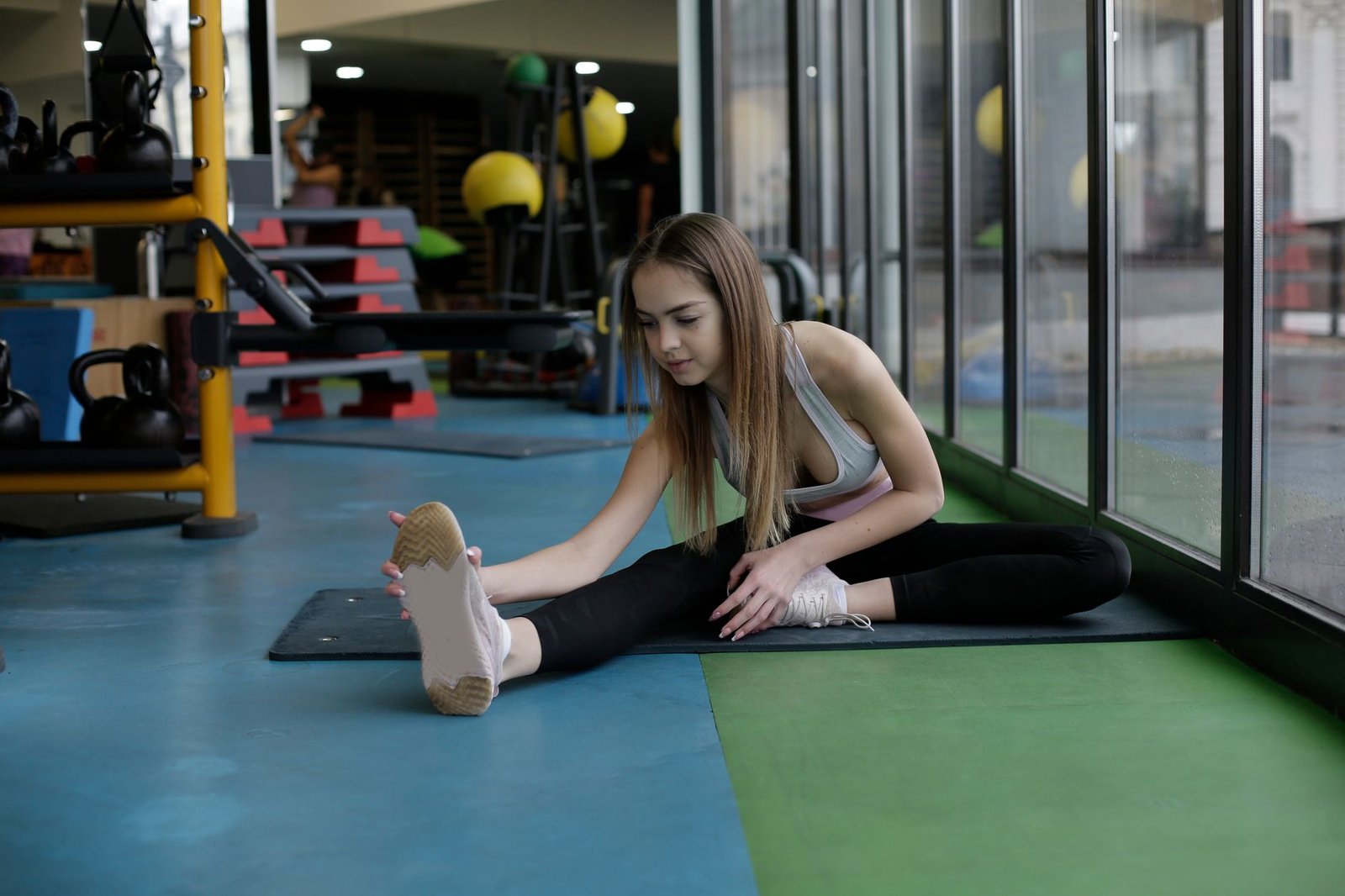
- Seated hamstring stretch — 30 seconds per side: extend one leg and hinge gently from the hips.
- Standing quadriceps stretch — 30 seconds per side: hold a wall, keep knees close, and avoid pulling hard.
- Half-kneeling hip flexor stretch — 30 seconds per side: pad the knee and gently tuck the pelvis.
- Figure-four glute stretch — 30 seconds per side: perform it seated if lying down is awkward.
- Doorway chest stretch — 30 seconds per side: place the forearm on the frame and turn slowly away.
- Child’s pose or supported lat stretch — 45 seconds: choose the version that feels comfortable for your knees and shoulders.
How to progress
Progress by improving the quality of the position before increasing intensity. You can:
- Hold 10–15 seconds longer
- Add a second set
- Practice one extra day per week
- Use less hand support
- Follow stretching with a controlled strength movement
Do not compare your range with photos online. Bone structure, training history, and proportions differ.
Do you need to stretch every muscle?
No. Focus on positions relevant to your daily life or training. Someone who sits for long periods might prioritize hips, calves, chest, and upper back. A runner may focus on ankle and hip range. A lifter may need a specific shoulder or squat position.
Stretching and pain
Stretching is not automatically the correct response to pain. A painful area may need load modification, strengthening, or medical assessment rather than more range. Do not aggressively stretch a new muscle strain, swollen joint, or irritated nerve.
Contact a qualified health professional if pain is severe, follows trauma, causes weakness or numbness, disturbs sleep, or persists despite sensible adjustments.
Frequently asked questions
How long until I become more flexible?
Some range changes are immediate and temporary. Lasting changes usually require repeated practice over weeks. Measure progress monthly, not after every session.
Is morning or evening better?
The best time is the one you can repeat. Many people feel stiffer in the morning, so use more gradual movement then.
Should I stretch both sides equally?
Usually, yes. A small natural difference is common. Do not force the tighter side to match in a single session.
How hard should a stretch feel?
Beginners often assume that a stronger stretch must create a better result. A more useful approach is to choose an intensity that you can hold without bracing, holding your breath, or trying to escape the position. You should feel clear tension, but not sharp pain, pins and needles, or joint instability.
Some days the same position will feel easier than others. Sleep, previous training, temperature, and how long you have been sitting can all change the sensation. Treat the range you have today as the starting point rather than trying to match yesterday’s deepest position.
Build a routine you can repeat
Choose four or five positions that relate to your normal activities or training. Keep the order the same for a few weeks so the routine becomes easy to remember. If a particular stretch consistently feels unhelpful, replace it rather than assuming you need to push harder.
- Use a wall or chair when balance limits the stretch.
- Change joint angle before adding more force.
- Breathe normally and allow the sensation to settle instead of bouncing.
- Follow stretching with normal movement if you are about to train.
How to tell whether stretching is helping
Useful progress may show up as a more comfortable everyday position, a larger controllable range, or less effort required to reach the same position. You do not need dramatic before-and-after photos. Small changes that transfer to training or daily life are more meaningful than briefly forcing a deeper stretch.
Static and dynamic stretching serve different purposes
Static stretching is useful when the goal is to spend time in a position and gradually improve tolerance to that range. Dynamic stretching is usually a better fit immediately before training because it combines range of motion with movement, temperature, and coordination.
You do not need to choose one forever. A simple approach is dynamic movement before training and longer static holds after training or in a separate flexibility session when increasing range is the priority.
Beginner progression
- Start with 20–30 second comfortable holds.
- Repeat one or two sets rather than forcing a longer hold.
- Increase range only when breathing and muscle tension remain controlled.
- Add active or lightly loaded work as the position becomes familiar.
Progress should show up as better control and comfort, not just a larger number on a flexibility test.
Training note: If you need to brace, grimace, or hold your breath, the stretch is probably too aggressive for a beginner routine.
Sources and further reading
- Acute stretching and range of motion: systematic review
- Long-term static stretching: systematic review and meta-analysis
- Static stretching duration and performance
Adapt all positions to your body and health. This routine is not rehabilitation for an injury.
Beginner Stretching Routine
A beginner stretching routine should focus on basic, stable positions with mild to moderate tension, held for 20–45 seconds, and practiced three or more times a week. The routine includes stretches like calf stretch, seated hamstring stretch, and half-kneeling hip flexor stretch, which are performed gradually and with proper support. It is important to avoid sharp pain, burning, or numbness, and to progress by improving the quality of the position before increasing intensity.
Frequently asked questions
What is the recommended duration for a beginner stretching routine?
A 10-minute beginner routine is recommended, with one round initially and a second round added after two weeks. The routine includes various stretches such as calf stretch, seated hamstring stretch, and others, held for 30 seconds per side.
What is the recommended approach for beginners when determining the intensity of a stretch?
Beginners should choose an intensity they can hold without bracing, holding their breath, or trying to escape the position. The stretch should feel like steady tension in the target area, not sharp pain or joint instability.