What foam rolling does well
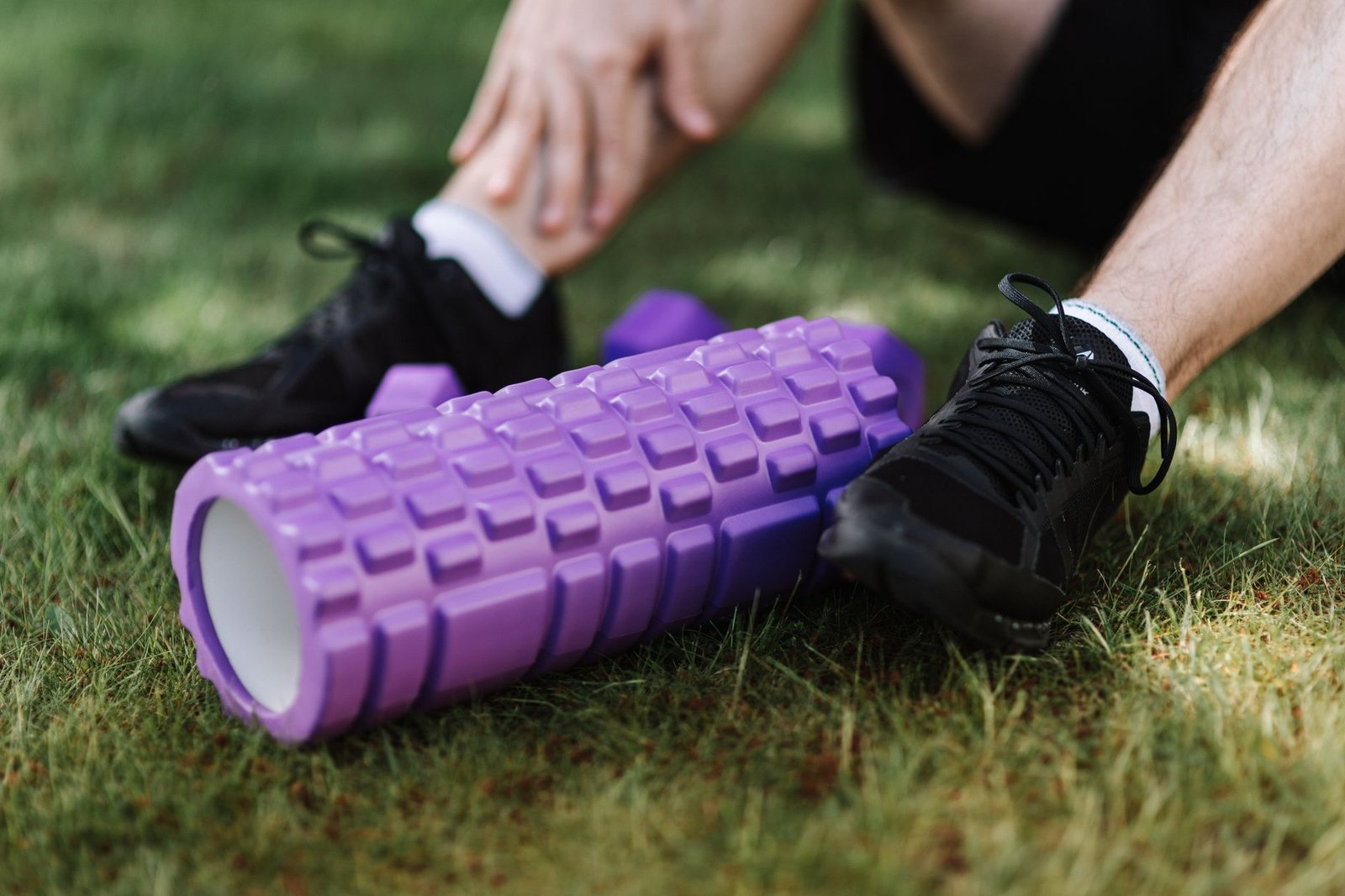
Foam rolling is inexpensive, simple, and useful for larger areas such as the quadriceps, calves, glutes, and upper back. Systematic reviews support short-term improvements in range of motion without clear reductions in strength.
The limitation is control. Some areas are awkward to reach, and pressure depends on body position and body weight.
What massage guns do well
Massage guns make it easy to apply localized percussion without supporting your body weight on the floor. That convenience can make them useful for calves, thighs, shoulders, and other accessible muscles.
Research suggests short-term improvements in flexibility and some recovery-related outcomes, but the evidence base is smaller than the marketing often implies.
Neither tool repairs muscle instantly
Both tools can change sensation and range of motion. Neither has been shown to erase fatigue or turn an under-recovered athlete into a fully recovered one.
If you are chronically sore because the program is too aggressive, the tool is not solving the main problem.
Which is better before training?
A short bout of foam rolling can increase range without obvious performance loss. A massage gun may produce a similar feeling of reduced stiffness. Keep either intervention brief and follow it with active movement.
The useful question is whether the next movement improves.
Which is better after training?
Choose based on comfort. Foam rolling may suit larger muscle groups and a slower routine. A massage gun may be easier when you want targeted pressure without getting on the floor.
Do not turn either method into a painful challenge.
Cost and convenience
A basic foam roller is far cheaper and has no battery, attachments, or charging needs. A massage gun is easier to target and can be used while sitting.
For most people, the foam roller is the better first purchase. Upgrade only if the convenience solves a real problem.
When to avoid aggressive pressure
Do not repeatedly hammer or roll directly over joints, acute injuries, bruises, or areas with altered sensation. Avoid pressure that causes numbness or sharp pain.
When symptoms are persistent or unexplained, a recovery gadget is not a substitute for assessment.
A simple comparison test
Choose one restricted movement, use the tool for 60–90 seconds on the relevant muscle group, then retest. Repeat the experiment on another day with the other tool.
The result will tell you more about your own useful response than generic claims that one device is universally superior.
Pressure control is the biggest practical difference
With a foam roller, body position determines pressure. You can unload the area with your arms or the opposite leg, but some positions require coordination. A massage gun lets you adjust pressure more directly with your hand and change locations quickly.
That convenience matters when a muscle is difficult to position on a roller, but it does not automatically create a stronger recovery effect.
Which tool is better for range of motion?
Foam rolling has a larger research base for acute range-of-motion changes. Massage-gun research also suggests short-term improvements, but fewer studies are available. Neither method should be expected to create permanent flexibility after one use.
If range is the goal, follow the tool with active movement through the new position.
Which tool is easier to dose?
A massage gun is easier to time and target: one or two minutes on a specific muscle is straightforward. Foam rolling often becomes less precise because people move around looking for tender spots.
Use a simple plan with either tool. Choose the muscle, use tolerable pressure, stop after a short dose, and retest.
What about travel and portability?
A small massage gun can be convenient during travel, while a full-size foam roller takes space. A compact roller or massage ball may solve the same problem at a fraction of the price.
Recovery tools should fit your routine. The device that stays in a cupboard has no advantage.
Foam rollers are better for some body regions
Large muscle groups such as the quads, glutes, calves, and upper back are easy to cover with a roller. The broad surface distributes pressure and lets you move gradually across the area.
A massage gun is easier around smaller targets where positioning on a roller is awkward, such as parts of the shoulder or forearm.
Massage guns are easier when mobility is limited
Getting down to the floor and supporting body weight can be difficult for some people. A handheld device may be more accessible in that situation. That is a usability advantage, not evidence that percussion is physiologically superior.
What each tool feels like under high pressure
Very high foam-rolling pressure can cause guarding because you have to support the body against the roller. Aggressive massage-gun pressure can create the same problem in a different way. If the muscle tenses against the tool, reduce pressure.
Comfortable pressure is easier to repeat and more likely to let you test whether the movement actually improves.
Which tool belongs in a home gym?
If you are building from scratch, a roller usually gives more value per krone. A massage gun makes sense later when convenience, portability, or targeted use matters enough to justify the extra cost.
How the tools fit into a warm-up differently
A roller is easy to combine with floor-based mobility: roll the calves, perform ankle rocks, then squat. A massage gun is easier to use while standing or sitting and can target one area between warm-up sets. That difference can shape which tool fits your routine better.
Neither tool should dominate the warm-up. One or two minutes on a relevant area is usually enough to decide whether it improves the next movement.
What research cannot tell you about preference
Even if two tools produce similar average changes in range of motion, the experience can be very different. One person may dislike the vibration of a massage gun; another may find floor rolling awkward. Personal preference matters because these are optional tools, not treatments with one required delivery method.
Choose one outcome and test it
If your goal is better squat depth, measure squat depth or ankle range. If your goal is simply reduced stiffness after training, rate that sensation consistently. Testing one outcome makes it easier to decide whether either tool is worth keeping.
Which tool works better in a shared gym?
A foam roller is simple, cheap, and easy to leave in a training space for anyone to use. Massage guns are personal devices with batteries, attachments, and more maintenance. For coaches or gyms, that practical difference can matter more than small differences in short-term range-of-motion effects.
Noise, battery life, and routine friction
A quiet massage gun may be convenient at home, while a loud device can be irritating in shared spaces. A roller never needs charging. These details sound mundane, but recovery tools only help when they fit the routine well enough to be used consistently.
One tool can serve several people differently
One athlete may use a roller before squats for calf comfort, while another uses the same roller after training for the upper back. A massage gun may be valuable to someone with limited floor mobility. The “better” tool depends heavily on how it solves a practical access problem.
A decision matrix for choosing one tool
| Priority | Foam roller | Massage gun |
|---|---|---|
| Lowest cost | Strong choice | Usually more expensive |
| Large muscle groups | Very practical | Works, but slower to cover area |
| Precise targeting | More awkward | Strong choice |
| Travel without charging | Strong choice | Battery dependent |
| Limited ability to get on the floor | Less convenient | Often easier |
This comparison is more useful than asking which device is “more advanced.” The best option is the one that solves the practical constraint you actually have.
What neither tool replaces
Neither replaces progressive strength, sensible training volume, or assessment of persistent pain. If the same area requires aggressive treatment before every session just to tolerate normal movement, investigate the source of the problem instead of escalating the recovery gadget.
Which tool is easier to coach?
A foam roller is straightforward to demonstrate to a group and easy to standardize in a gym setting. A massage gun requires more explanation around pressure, safe areas, and how long to stay on one spot. For coaches, that makes the roller simpler for general group use.
For individual athletes, the massage gun can be more convenient when the target area is specific and the user understands how to dose it.
Maintenance and durability matter too
A roller can last for years with almost no maintenance. Massage guns have batteries, motors, chargers, and attachments that can wear or disappear. If two tools give you a similar result, durability may be the deciding factor.
Recovery equipment should reduce friction in the routine, not create another piece of equipment you have to manage.
Training note: Start with the cheaper tool. If a foam roller already gives you the comfort and range you want, a massage gun is a convenience upgrade—not a recovery necessity.