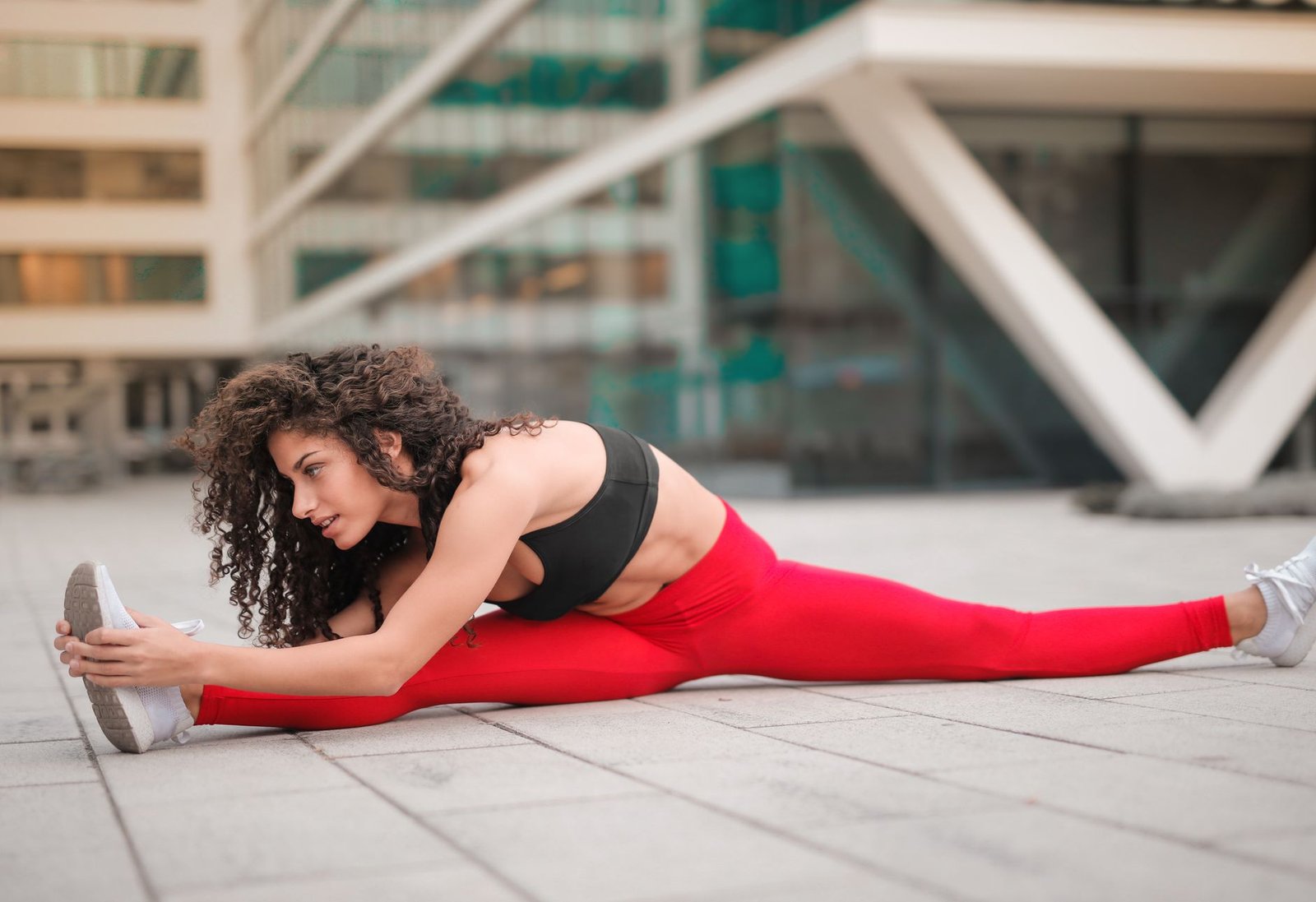

For a quick mobility effect, you do not need a marathon hold
A short static stretch can increase range of motion temporarily. For a warm-up, one or two comfortable holds of roughly 20–30 seconds may be enough when followed by active movement that uses the new range.
The purpose before training is not to create maximum flexibility. It is to make the required position available without creating unnecessary fatigue.
For long-term flexibility, think in total weekly volume
Recent meta-analytic work suggests that flexibility gains respond to accumulated stretching volume, with diminishing returns once weekly volume becomes reasonably high. That makes consistency more important than one heroic five-minute hold.
A practical starting point is several short holds across the week rather than one very long session. Progress by increasing range or total time gradually.
Longer is not automatically better
Very long static holds can temporarily reduce force or explosive output, especially when performed immediately before maximal efforts. The effect depends on stretch duration, intensity, and what happens afterward.
If you enjoy longer stretching sessions, place them after training or in a separate flexibility session rather than immediately before sprinting, jumping, or heavy lifting.
How intense should a stretch feel?
A useful stretch creates clear tension without sharp pain, numbness, or the urge to hold your breath. More discomfort does not guarantee more adaptation.
Choose a position you can maintain calmly. If you are shaking, grimacing, or compensating elsewhere, reduce the range.
A simple flexibility session
Pick two or three priority positions. Hold each stretch for 30–60 seconds, repeat once or twice, and train them two or three times per week. That gives you enough volume to build a repeatable habit without turning flexibility into an exhausting session.
Retest the movement you care about every few weeks rather than judging progress by how intense the stretch feels.
When to use shorter holds
Shorter holds make sense before training, during movement breaks, or when the goal is simply to reduce the sense of stiffness. Combine them with active range or a rehearsal set so the new position becomes useful.
A brief calf stretch followed by ankle rocks before squats is one example.
When longer holds make sense
Longer accumulated holds can be useful when flexibility is the primary goal and there is no immediate need for maximal force. Dancers, gymnasts, martial artists, and athletes with specific range demands may need more dedicated work than a recreational lifter.
Even then, the program should be progressive rather than painful.
Track the movement, not the timer
The timer is only a dosing tool. The real outcome is whether the joint moves through the required range with better control and less unnecessary effort.
If months of stretching time produce no change in the target movement, reassess the exercise selection or limiting factor.
Think in accumulated time, not one perfect hold
Flexibility training responds to the total dose you accumulate, not to finding one magical hold length. Two 30-second holds can be just as practical as one longer hold when they allow you to relax, maintain position, and repeat the work consistently.
This is especially useful for beginners. A shorter hold makes it easier to learn the position without turning the stretch into a test of pain tolerance.
What changes if the goal is performance right now?
Before a workout, the goal is usually to access a position rather than create a large flexibility stimulus. Use the minimum dose that changes the movement, then move into active range and rehearsal sets. A long passive hold makes less sense when you need strength or speed immediately afterward.
After training or in a separate flexibility session, you have more freedom to accumulate time because there is no immediate performance demand.
How to progress a stretch over several weeks
Do not add time indefinitely. Once you can hold the position comfortably, progress by moving slightly deeper while preserving normal breathing, or by using a variation that asks for more active control. Loaded stretching can also be useful when appropriate because it combines range with strength.
Retest the target movement every two or three weeks. More tolerance in the stretch is useful only if it supports the range you actually want.
When a timer becomes a distraction
If you spend the entire hold watching the clock while bracing or compensating, reduce the dose. Stretching should be repeatable enough that technique remains stable through the full hold.
A simple rule is to stop before the position becomes a fight. Consistent submaximal stretching is easier to recover from and easier to repeat than occasional aggressive sessions.
Different muscles may need different positions, not different timers
A hamstring stretch, calf stretch, and shoulder stretch can all use similar hold times, but the setup determines whether the target tissue is actually being challenged. If you compensate by rounding the back or rotating the pelvis, adding another thirty seconds does not solve the problem.
Learn the position first. Once the setup is repeatable, the timer becomes useful for dosing.
How stretching fits around strength work
Strength training through a large range of motion can itself improve flexibility. Deep split squats, controlled Romanian deadlifts, calf raises through a full range, and overhead work can all expose tissues to length under load.
This means a good flexibility plan may combine static stretching with strength rather than treating them as competing methods. Use static work to access range and loaded movement to build control there.
When daily stretching is appropriate
Daily light stretching can work well when the dose is small and recovery is easy. You do not need a hard flexibility session every day. A few comfortable holds for one priority area can be enough to build consistency.
If soreness from stretching starts to affect normal training, reduce intensity or weekly volume. Flexibility work is still training stress.
How to know when you have enough range
More flexibility is not always useful. Once you can reach the positions required for your sport, training, and daily life with control, additional range may offer little benefit. At that point, maintaining the range and getting stronger within it is usually a better use of time.
Use different stretch doses for maintenance and improvement
If you already have the range you need, the maintenance dose can be small. A few short exposures each week may be enough. If you are trying to create a new range, use more total weekly time and pair that range with strength so it becomes usable.
This distinction keeps flexibility work proportionate. Not every joint needs continuous improvement, and more range is not automatically better once your sport or lift no longer requires it.
Three examples with different stretch durations
Before squats: a lifter with stiff calves might use one 20–30 second calf hold, perform ankle rocks, then squat. After a run: a runner working on hamstring range might use two 45-second holds per side. Dedicated flexibility session: a gymnast or martial artist may accumulate several minutes across multiple sets because flexibility is itself a training goal.
The timer changes because the task changes. That is more useful than applying one duration to every context.
When not to chase more range
If you already reach the positions your sport or lifting technique requires comfortably, extra flexibility may not improve performance. At that point, time is often better spent strengthening the available range and practicing the skill itself.
Different tissues may need different expectations
Calves, hamstrings, hip flexors, and shoulders do not always respond the same way to one generic stretch prescription. The joint position, leverage, and training history matter. A calf stretch used to improve squat dorsiflexion can be brief and immediately tested in the squat. A hamstring flexibility goal may benefit from a longer dedicated dose because the target is a broader change in range rather than preparation for one lift.
That is another reason the clock cannot be separated from the movement goal.
When a stretch should be replaced by loaded range
If you can reach the position passively but lose it as soon as load is added, adding more passive time may not solve the problem. Replace part of the stretching volume with exercises that strengthen the end range: split squats, calf raises from a deficit, controlled Jefferson curls where appropriate, or light overhead carries depending on the movement.
Flexibility is most useful when it survives contact with real training.
How stretch duration changes with age and training history
Someone who has trained flexibility for years may reach a useful position quickly, while a beginner may need more total exposure simply to become comfortable with the movement. Older adults may also benefit from a gradual progression that combines stretching with strength through the available range rather than relying on passive holds alone.
The useful dose is therefore partly individual. Start with a modest, repeatable amount and adjust based on movement change rather than copying someone else’s timer.
Use a log when flexibility is a real goal
Record the stretch, hold time, perceived intensity, and one movement measure such as toe-touch distance, ankle dorsiflexion, or squat depth. Recheck every two to four weeks. If the movement is improving, keep the plan stable. If not, change one variable at a time.
When stretching duration should shrink over time
If a 45-second hold was originally needed to reach a comfortable squat or overhead position, but after several weeks the same range appears after 15 seconds, that is progress. Reduce the warm-up dose instead of preserving the longer hold out of habit.
The long-term goal is to need less preparation for the range you already own. Flexibility training should eventually make normal movement easier, not create a permanent pre-session obligation.
Training note: Use the shortest effective dose for the goal. Before training, keep static holds brief and follow them with active movement. For long-term flexibility, accumulate consistent weekly volume.