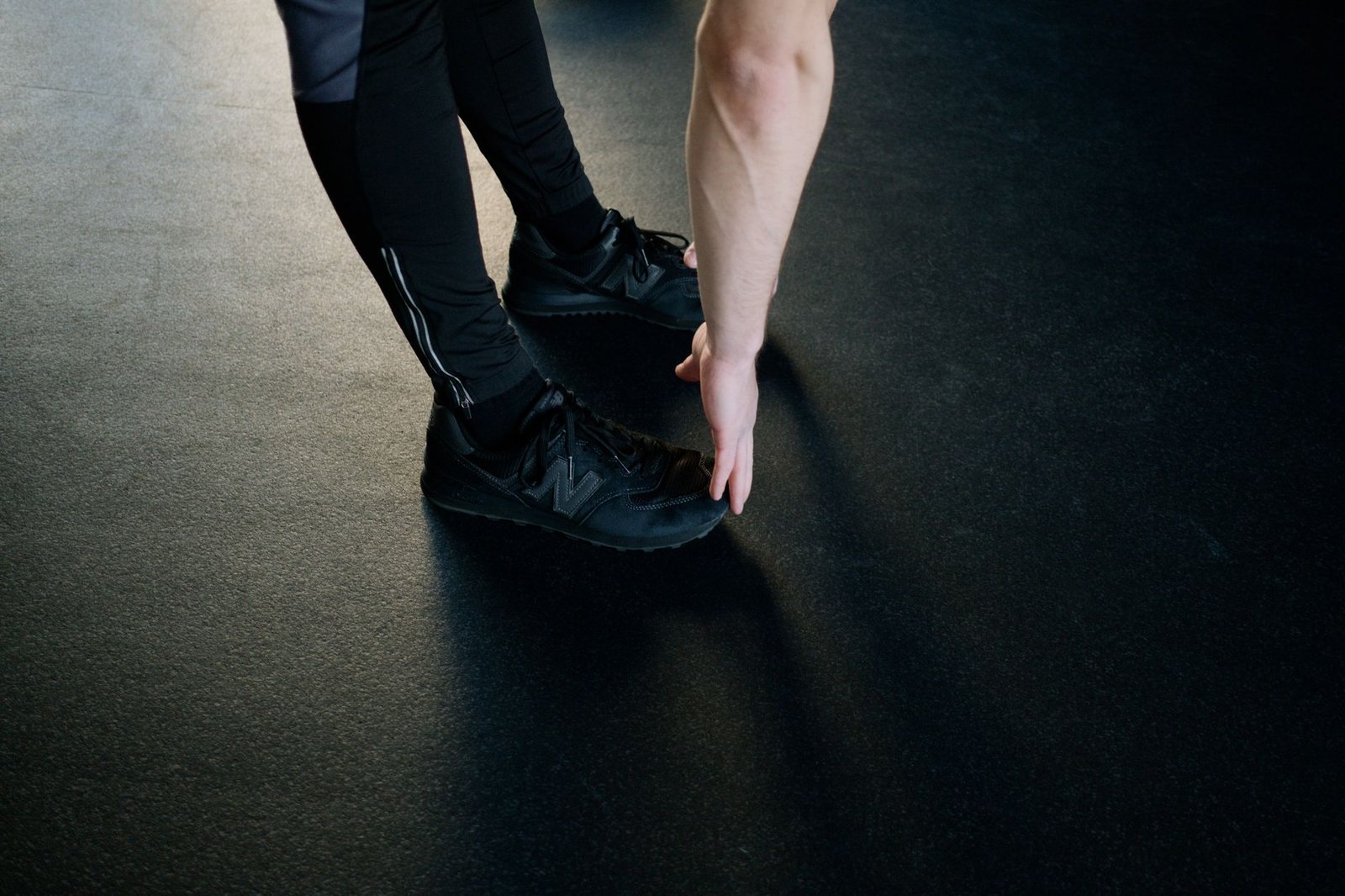

Why static stretching got a bad reputation
Research showing temporary reductions in strength and power often involved longer static stretching routines. These findings were frequently summarized into the rule that you should never stretch before exercise.
Real warm-ups are usually more mixed. A short static stretch followed by dynamic movement and specific rehearsal is very different from several minutes of passive stretching followed immediately by a maximal effort.
When static stretching makes sense before training
Use it when a specific range limitation is clearly affecting the movement you are about to perform. A short calf stretch before squatting or a brief shoulder stretch before an overhead movement may help if it produces an immediate improvement.
Retest the movement after the stretch. If nothing changes, the stretch may not be addressing the relevant restriction.
Keep the dose small before explosive work
For sprinting, jumping, Olympic lifting, and heavy strength work, avoid long passive holds immediately before the key effort. Use brief holds if needed, then move into dynamic drills and progressive practice.
The final part of the warm-up should look increasingly like the activity you are about to perform.
Static versus dynamic stretching
Dynamic stretching combines range of motion with movement and is often a better default before sport or lifting. Static stretching is better suited to targeted range work when one area needs extra attention.
You do not have to choose one method exclusively. A sensible warm-up can use both.
What if you genuinely need more flexibility?
If flexibility is a major training goal, do the longer static stretching work after the main session or in a separate session. That lets you accumulate enough dose without compromising the performance you care about in the workout.
This is especially useful for athletes who need large ranges for their sport.
A simple strength-training warm-up
Start with easy general movement, use one short static stretch only if a restriction is present, follow with active range work, and finish with progressive sets of the main lift.
The entire sequence should leave you more prepared, not more tired.
Signs you stretched too aggressively
The muscle feels weak, the joint feels unstable, or the next movement feels less coordinated. Those signs suggest the dose was too large or poorly timed.
Modify the intensity of stretching or schedule longer flexibility sessions for another time of day.
What about injury prevention?
Static stretching alone should not be seen as a guaranteed way to prevent injury. Other factors like training load, strength, sport exposure, fatigue, and more also play a role.
Use stretching for range and comfort rather than as a substitute for a well-designed program.
Why duration matters more than the label “static”
Static stretching is often discussed as if all methods have the same effect. A gentle 20-second calf stretch is not the same as several minutes of intense stretching for the same muscles. The longer and more intense the stretch, the more likely it is to temporarily affect force production.
This is why warm-up advice should specify dose rather than simply saying “static stretching is bad.”
How to combine static and dynamic work
If a short static stretch improves a needed range, follow it with dynamic movement through that range. For example, stretch the calf briefly, then perform ankle rocks and a few bodyweight squats. The sequence moves from passive access to active control.
The final warm-up sets should then reproduce the actual exercise so the nervous system rehearses the task under progressively higher load.
When flexibility demands are unusually high
Sports such as gymnastics, dance, martial arts, and some throwing events may require more range than typical strength training. These athletes may legitimately need stretching before performance, but the protocol still has to balance flexibility with force and control.
Use the smallest dose that gives access to the required range, then restore speed and stiffness with dynamic work.
What if stretching is the only way the movement feels safe?
If a joint repeatedly feels unusable until you complete a long stretch routine, investigate why. The issue may be technique, training load, strength in the end range, or a position that does not suit you well.
A warm-up should prepare movement; it should not become a dependency that hides a persistent problem.
Examples where a short static stretch can help
A lifter whose heels rise because calf range is temporarily restricted may benefit from a brief calf stretch before ankle rocks and squat warm-up sets. An athlete who cannot comfortably reach an overhead position may use a short lat or shoulder stretch before active overhead work.
The important part is the retest. If the position does not improve, keep looking for the real limiter.
Examples where static stretching is probably unnecessary
If your squat, sprint stride, or pressing position already feels normal, adding static stretching “just in case” may only lengthen the warm-up. Use preparation to solve a problem, not to satisfy a checklist.
This makes warm-ups more efficient and leaves more energy for the actual session.
What happens after a long static stretch?
Long passive holds can temporarily change muscle-tendon behavior and stretch tolerance. That may be useful for flexibility, but it is not always desirable immediately before high-force work. Dynamic movement and progressive rehearsal can restore task-specific readiness, but the simplest option is often to move longer stretching elsewhere.
How beginners should approach pre-workout stretching
Beginners do not need elaborate mobility routines before every lift. Learn the movement, use light rehearsal sets, and add one targeted stretch only when a clear range limitation appears.
This prevents warm-ups from becoming more complicated than the training itself.
A practical rule for heavy lifting days
When the session includes heavy squats, deadlifts, presses, or Olympic lifts, keep static stretching targeted and brief. If a joint already moves well enough for the lift, skip the passive hold and use the progressive warm-up sets instead. If one position is clearly restricted, use a short hold, retest, and then rehearse the lift.
This approach avoids turning the warm-up into a flexibility session while still leaving room for a useful stretch when it solves a real problem.
What to do on lighter technique days
On lighter days you have more freedom to combine mobility and strength. A slightly longer stretch followed by controlled end-range work can be useful because there is less concern about temporarily reducing maximal output.
That makes lighter sessions a good place to build range you can then maintain with shorter warm-up doses on heavy days.
A before-and-after example for squat preparation
Suppose your first bodyweight squat shows the heels lifting and the ankle feels blocked. Use a brief calf stretch, then perform ankle rocks and repeat the squat. If the heel stays down and the squat feels more balanced, the intervention helped. If nothing changes, move on instead of extending the hold.
This simple test keeps static stretching tied to a training problem rather than turning it into a compulsory ritual.
How to handle team-sport warm-ups
In sports where the warm-up must prepare sprinting, jumping, cutting, and skill work at once, long static stretching is rarely the best use of limited time. Short targeted holds can be included for individual restrictions, but the group warm-up should remain dynamic and progressively sport-specific.
Training note: Static stretching before training is a tool, not a rule. Use a brief dose when it improves a needed position, then follow it with movement that resembles the workout.
Sources and further reading
Frequently asked questions
When is it appropriate to use static stretching before a strength workout?
It is appropriate to use static stretching before a strength workout when a specific range limitation is clearly affecting the movement you are about to perform. A few brief holds are unlikely to ruin a session, and a short static stretch can help if it produces an immediate improvement. Retest the movement after the stretch to determine if the stretch is addressing the relevant restriction.
What are the key factors that determine when to use a short static stretch during a workout?
The key factors include technique, training load, strength in the end range, and a position that does not suit you well. A short static stretch is appropriate when it clearly improves the next movement.